


AISI 201/ JIS SUS201
Qilu
Product Description
Hot rolled, cold drawn, peeled and ground 201 round bar from 6 mm to 250 mm, supplied solution annealed or in cold drawn tempers. A manganese-nitrogen austenitic grade with 3.5–5.5% nickel instead of the 8% in 304 — higher annealed yield strength at a lower alloy cost, and correspondingly less corrosion reserve in chloride service.
Equivalent to: AISI / SAE 201 (UNS S20100, ASTM A276 / A479) · EN 1.4372 / X12CrMnNiN17-7-5 (EN 10088-3) · JIS SUS201 (G4303) · GB/T 20878 1Cr17Mn6Ni5N
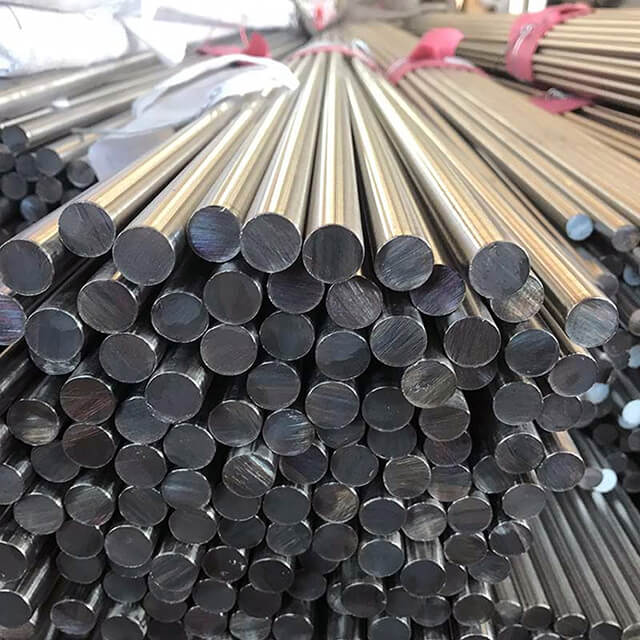
AISI 201 stainless round bar, annealed and pickled
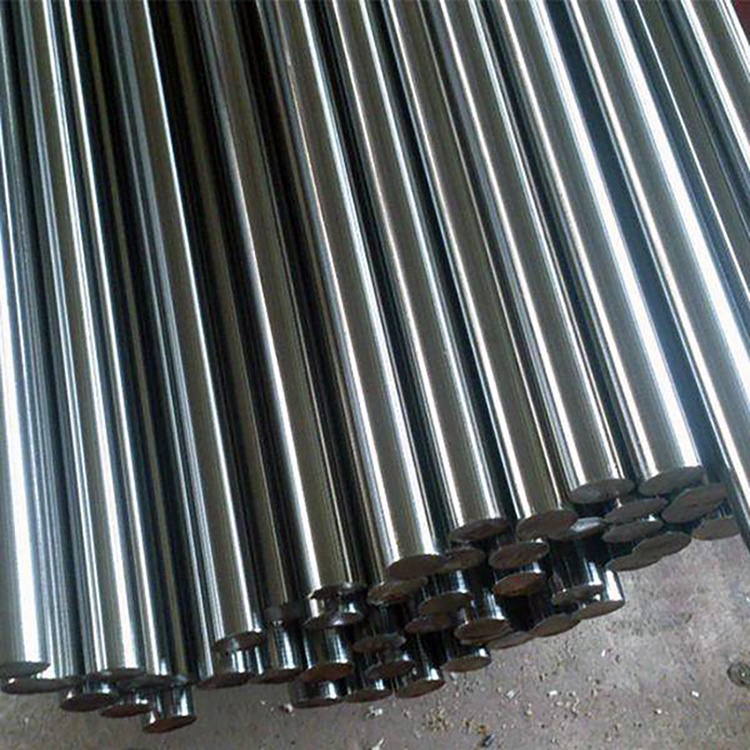
Cold drawn 201 bar, bright surface for hardware and trim parts
Product form: hot rolled bar, cold drawn bar, peeled bar, centreless ground bar
Diameter range: 6 mm – 250 mm; lengths 3–6 m, cut to size on request
Delivery condition: solution annealed (+A), pickled, or cold drawn to 1/4 hard and above
Production route: EAF + AOD refining, hot rolling, solution annealing, cold drawing or peeling where ordered
Standards: ASTM A276 / A479, EN 10088-3 (1.4372), JIS G4303 (SUS201), GB/T 20878
Certificates: EN 10204 3.1 with actual chemistry and mechanical results of the heat
Testing: tensile and hardness per heat; PMI on every incoming heat; UT to EN 10228-3 by agreement
Lead time: stock sizes ex-warehouse; cold drawn material 20–30 days depending on size
201 replaces most of the nickel in an 18-8 composition with manganese and nitrogen. Manganese at 5.50–7.50% holds the austenite phase open the way nickel does, and nitrogen at up to 0.25% does the same job more cheaply per point of strength — it also raises annealed yield strength, which is why a 201 bar out-tests a 304 bar on yield straight out of the anneal. Chromium stays at 16.00–18.00%, the same window as 301 and about two points under 304. Nickel at 3.50–5.50% is the cost lever, and it is also the number that decides whether the grade is genuinely 201 or a mill's own variation.
| Element | C | Mn | Si | P | S | Cr | Ni | N |
|---|---|---|---|---|---|---|---|---|
| ASTM A276 (201 / S20100) | 0.15 max | 5.50–7.50 | 0.75 max | 0.060 max | 0.030 max | 16.00–18.00 | 3.50–5.50 | 0.25 max |
| EN 10088-3 (1.4372 X12CrMnNiN17-7-5) | 0.15 max | 5.50–7.50 | 1.00 max | 0.045 max | 0.015 max | 16.00–18.00 | 3.50–5.50 | 0.05–0.25 |
| JIS G4303 (SUS201) | 0.15 max | 5.50–7.50 | 1.00 max | 0.045 max | 0.030 max | 16.00–18.00 | 3.50–5.50 | 0.25 max |
| GB/T 20878 (1Cr17Mn6Ni5N) | 0.15 max | 5.50–7.50 | 1.00 max | 0.045 max | 0.030 max | 16.00–18.00 | 3.50–5.50 | 0.05–0.25 |
Two differences in that table matter commercially. EN 10088-3 writes a nitrogen floor of 0.05% where ASTM only writes a ceiling, and it tightens sulfur to 0.015% against 0.030%. A heat made to the ASTM window with 0.02% N and 0.028% S is legal 201 and will certify, but it will sit at the bottom of the strength range and machine differently from a European heat. When a drawing cites 1.4372, we book to the EN window rather than to the looser ASTM one.
Annealed 201 is stronger than annealed 304 and less ductile in deep drawing. That single trade explains where the grade is used and where it fails: it is a good material for parts that need stiffness and appearance, and a poor one for parts that need to be stretched into a deep shell.
| Condition | Tensile, Rm | Yield, Rp0.2 | Elongation | Hardness |
|---|---|---|---|---|
| Annealed, ASTM A276 bar | 655 MPa min | 260 MPa min | 40 % min | 255 HBW max |
| Annealed, ASTM A240 sheet (reference) | 655 MPa min | 310 MPa min | 40 % min | — |
| 1/4 hard, ASTM A666 temper basis | 860 MPa min | 515 MPa min | Reduced | — |
| 1/2 hard | 1035 MPa min | 760 MPa min | Reduced | — |
| Full hard | 1275 MPa min | 965 MPa min | Single digits | — |
For comparison, annealed 304 is specified at 515 MPa tensile and 205 MPa yield. A buyer who substitutes 201 for 304 to save alloy cost gets roughly 50% more annealed yield strength as a side effect — useful in a bracket, misleading in a part that was designed around 304's ductility and forming behaviour. The temper figures above follow the ASTM A666 table for cold reduced austenitic product; for bar we agree the temper or the minimum strength with the customer and report the achieved values on the 3.1 certificate.
| Standard | Grade | Material No. / UNS |
|---|---|---|
| ASTM A276 / A479 (USA) | 201 | UNS S20100 |
| EN 10088-3 (Europe) | X12CrMnNiN17-7-5 | 1.4372 |
| JIS G4303 (Japan) | SUS201 | — |
| GB/T 20878 (China) | 1Cr17Mn6Ni5N | — |
| Low-carbon variant (welded work) | 201L | UNS S20103 |
"201" on its own is a loose commercial label. India, China and Korea all produce grades sold as 201 with nickel between 1% and 5%, and some of them will not certify to ASTM A276 at all. When a specification matters, the order line should name the standard and the UNS or EN number, not just the three digits.
Indoor architectural trim, handrails, wall panels, elevator interiors
Furniture frames, display racks, shelving supports and shop fittings
Cold headed fasteners, rivets and hardware where the higher annealed strength is an advantage
Appliance trim, kitchen equipment parts and cookware components not exposed to aggressive detergents
Automotive decorative trim, exhaust tips and non-structural brackets
General industrial fabrication where appearance and cost matter more than corrosion reserve
The boundary is the environment, not the part shape. Indoors, dry, occasionally wiped down: 201 holds up for years. Outdoors near the coast, in chlorinated water, in contact with salt, acid or food over long periods: it does not, and the honest answer is 304 or 316L round bar. Where the part must also resist wear, a martensitic grade such as 410 is a different answer again, because it hardens.
Pitting resistance in stainless depends mainly on chromium and molybdenum, and 201 has less chromium than 304 and no molybdenum at all. The practical consequence is a lower critical pitting temperature and a lower tolerance for chloride. A 201 handrail in a coastal town develops tea staining within months where 304 would stay clean for years; a 201 fitting in a chlorinated swimming pool environment can pit through in a season.
There is a second, less obvious effect. Manganese in the steel combines with sulfur to form manganese sulfide inclusions, and these are where pitting starts. That is why the EN specification tightens sulfur to 0.015%: fewer inclusions, fewer initiation sites. A high-sulfur 201 made to the ASTM ceiling will machine more freely and corrode sooner, which is a legitimate trade only if the customer knows it is being made.
Food contact is a separate question. 201 is not a food-grade approval in itself, and most food equipment specifications call for 304 or 316 on the basis of nickel release and cleanability. We do not recommend 201 for food contact surfaces, and we say so at enquiry rather than letting the price difference decide it.
Solution annealing. 1030–1100 °C followed by rapid cooling. This is the delivery condition for annealed bar and the only heat treatment that softens the grade. As with all austenitics, there is no hardening response to quenching: heating and quenching 201 gives annealed 201.
Cold working. 201 work hardens faster per unit of strain than 304, so bending, thread rolling and cold heading need more force and may need an intermediate anneal on severe reductions. Springback is higher, and tooling set for 304 will not reproduce the same angles. On the other hand, the same behaviour gets a cold headed fastener to a high strength without any heat treatment.
Machining. Gummy and work hardening, like the rest of the family. Sharp tooling, generous feed, no dwell, coolant at the cut. The higher sulfur allowed by ASTM helps here, which is one reason mill-grade 201 machines better than a tight-specification European heat.
Welding. Weldable with the usual austenitic practice, but the weld and its heat-affected zone are less corrosion resistant than the parent metal, and 201 is more sensitive to sensitisation than 304L because of its carbon ceiling. For welded assemblies in a wet environment, use 201L or move to 304L. Pickle and passivate after welding; a brushed weld that is left unpassivated is where the first rust appears. The relation between surface condition and service life is the same one described in our note on bar condition and tolerance class.
Solution annealing with recorded cycles; pickling and passivation lines for hot rolled bar
Cold drawing to named tempers, with achieved tensile reported per lot
Peeling and centreless grinding to h9–h11; straightening after drawing
PMI / XRF on every incoming heat — the working guard against 201 sold as 304
Tensile and hardness testing per heat, results on the EN 10204 3.1 certificate
UT to EN 10228-3 or ASTM A388 by agreement
ISO 9001 certified; ABS / BV / CCS / DNV survey experience where classification is required
Export packing: strapped bundles, end caps, VCI on request, sea-worthy cases for long bar
In dry indoor service with no chlorides and no food contact, often yes. In anything wet, salty, chlorinated or welded-and-unpassivated, no — the corrosion reserve is not there. If a customer's drawing says 304, we will not ship 201 as an equivalent; the two grades are interchangeable in shape, not in service.
Annealed 201 is essentially non-magnetic. Cold drawn or heavily formed 201 becomes slightly magnetic as strain-induced martensite forms, more so than 304 under the same deformation. A magnet is therefore not a reliable grade test on cold worked bar; PMI is.
Nickel. 201 carries 3.5–5.5% against 8–10.5% in 304, and manganese plus nitrogen make up the difference in phase stability. The saving tracks the nickel price, so the gap widens and narrows with the LME — which is also why "201" appears in the market whenever nickel is expensive and quietly disappears when it is not.
Hot rolled and annealed, pickled or peeled, or cold drawn and ground to h9–h11 depending on diameter. Tell us if the bar is bar-fed or if the diameter is a finished surface; the tolerance classes and what they mean in micrometres are set out in our guide to bar condition and tolerance class.
Yes — chemistry and mechanical results for the heat that made the bar, not catalogue minimums. This matters more for 201 than for most grades, because the "201" label covers a wide range of real compositions. If you need 3.2 with third-party witness, add it to the enquiry.
Send the diameter, length, condition, standard (ASTM A276 or EN 1.4372) and quantity to enquiry@qilumetal.com. We quote AISI 201 / 1.4372 / SUS201 round bar with EN 10204 3.1 certificates and will tell you plainly when the duty calls for 304 or 316 instead — a short conversation now is cheaper than a pitting claim later.


