


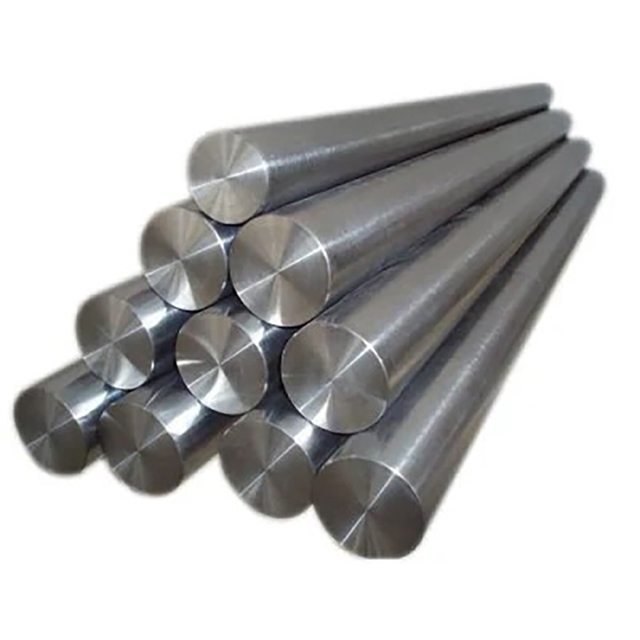


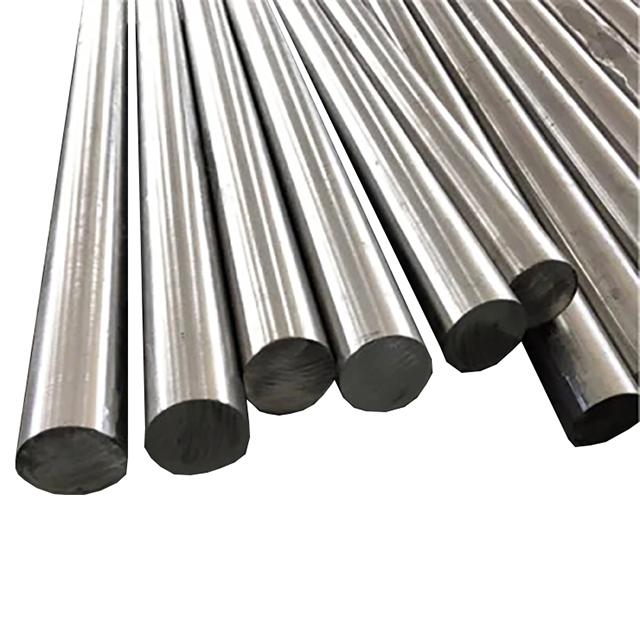


AISI 301 JIS SUS301 DIN 1.4319
Qilu
Product Description
Hot rolled, cold drawn, peeled and ground 301 round bar from 6 mm to 250 mm, in the annealed condition for forming or in cold drawn tempers for strength. A 17% chromium, 7% nickel metastable austenitic grade that turns part of its austenite into martensite when it is cold worked — the reason a 301 spring or clamp holds load without any quench and temper cycle.
Equivalent to: AISI / SAE 301 (UNS S30100, ASTM A276 / A479) · EN 1.4319 / X5CrNi17-7 (EN 10088-2) · JIS SUS301 (G4303) · GB/T 1220 1Cr17Ni7
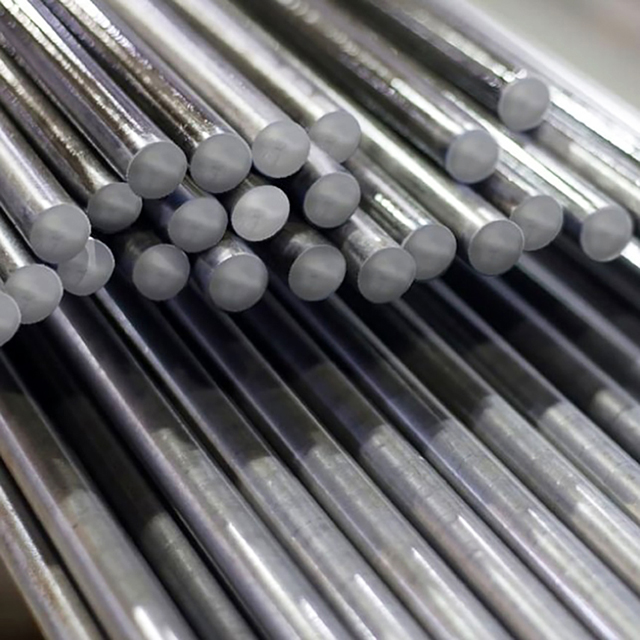
AISI 301 stainless round bar, peeled and annealed
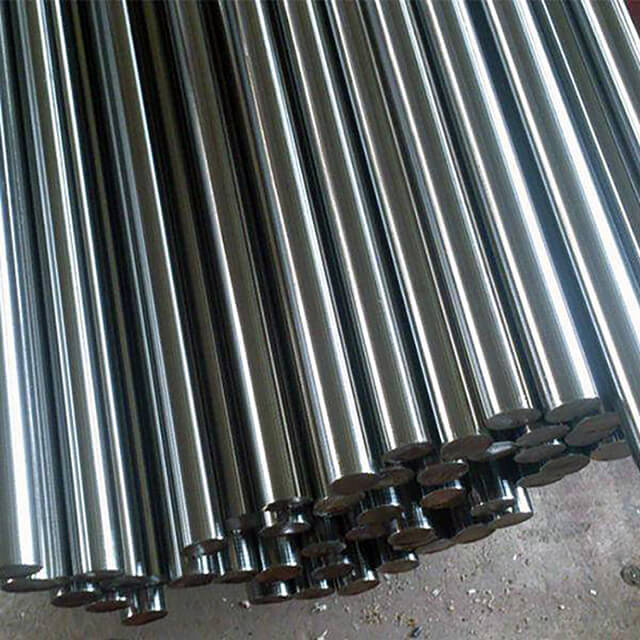
Cold drawn 301 bar, bright finish for spring and clamp parts
Product form: hot rolled bar, cold drawn bar, peeled bar, centreless ground bar
Diameter range: 6 mm – 250 mm; lengths 3–6 m, cut to size on request
Delivery condition: solution annealed (+A), or cold drawn to 1/4 hard, 1/2 hard, 3/4 hard and full hard
Production route: EAF + AOD refining, hot rolling, solution annealing, then cold drawing or peeling where ordered
Standards: ASTM A276 / A479, EN 10088-2 (1.4319), JIS G4303 (SUS301), GB/T 1220
Certificates: EN 10204 3.1 with the actual chemistry and mechanical results of the heat
Testing: tensile and hardness per heat; PMI on every incoming heat; UT to EN 10228-3 by agreement
Lead time: stock sizes ex-warehouse; cold drawn tempers 20–30 days depending on size and temper
301 is what happens when you take the 18-8 formula and deliberately under-stabilise it. Nickel is held at 6.00–8.00%, roughly two points below 304, and carbon is allowed up to 0.15% instead of 0.08%. Both changes lower the temperature at which austenite starts to transform under strain, so the structure stays austenitic as supplied but converts readily once a die, a roll or a bending brake works the surface. Chromium sits at 16.00–18.00%, also below 304, which is the honest reason 301 gives up pitting resistance in chloride service.
| Element | C | Mn | Si | P | S | Cr | Ni | N |
|---|---|---|---|---|---|---|---|---|
| ASTM A276 (301 / S30100) | 0.15 max | 2.00 max | 1.00 max | 0.045 max | 0.030 max | 16.00–18.00 | 6.00–8.00 | 0.10 max |
| EN 10088-2 (1.4319 X5CrNi17-7) | 0.15 max | 2.00 max | 1.00 max | 0.045 max | 0.030 max | 16.00–18.00 | 6.00–8.00 | 0.10 max |
| JIS G4303 (SUS301) | 0.15 max | 2.00 max | 1.00 max | 0.045 max | 0.030 max | 16.00–18.00 | 6.00–8.00 | 0.10 max |
| GB/T 1220 (1Cr17Ni7) | 0.15 max | 2.00 max | 1.00 max | 0.035 max | 0.030 max | 16.00–18.00 | 6.00–8.00 | — |
Two chemistry notes worth having in front of you at enquiry stage. First, some European drawings for spring temper strip cite 1.4310 / X10CrNi18-8 rather than 1.4319. Both describe the same 17/7 family but the carbon window differs, and a heat ordered to one will not certify to the other. We confirm which designation the drawing actually means before booking the heat. Second, nitrogen is capped at 0.10% and is not used here the way it is in 201 — the strengthening mechanism in 301 is strain-induced transformation, not interstitial nitrogen, and adding nitrogen would only stabilise the austenite you are trying to destabilise.
Annealed 301 is a soft, highly ductile austenitic steel with modest strength. The strength people buy 301 for arrives after cold drawing, and it arrives fast: a few percent of cold reduction moves tensile strength by hundreds of megapascals, because the strain converts austenite to martensite rather than merely adding dislocations. That is also why the property is not a single number — it is a function of how much the bar was reduced.
| Condition | Tensile, Rm | Yield, Rp0.2 | Elongation | Where it is used |
|---|---|---|---|---|
| Annealed (ASTM A276 bar) | 515 MPa min | 205 MPa min | 40 % min | Forming, bending, welded assemblies, parts cold formed after delivery |
| 1/4 hard (ASTM A666 temper basis) | 860 MPa min | 515 MPa min | Reduced | Light structural parts, trim that must hold shape |
| 1/2 hard | 1035 MPa min | 760 MPa min | Reduced | Clamps, brackets, conveyor components |
| Full hard | 1275 MPa min | 965 MPa min | Single digits | Springs, retaining rings, parts loaded in service without further forming |
The temper values above come from the ASTM A666 table for austenitic product in the cold reduced condition. Bar is not flat product, so the practical statement we make to customers is: tell us the temper or the minimum tensile strength, and we will draw to it and report the achieved values on the 3.1 certificate. A "full hard" call-off without a strength figure is an invitation to argue later, because the same nominal temper can land 80 MPa apart between mills and between bar sizes.
Two consequences follow that designers transferring a part from 304 notice within a week. Springback rises with yield strength, so tooling set for annealed 304 will not reproduce the same bend angle in half hard 301. And magnetic permeability climbs as martensite forms: annealed 301 is essentially non-magnetic, a heavily cold drawn bar is measurably magnetic. If the part sits next to a sensor, a magnetic chuck or a magnetic particle inspection station, that change is a functional issue, not a curiosity.
| Standard | Grade | Material No. / UNS |
|---|---|---|
| ASTM A276 / A479 (USA) | 301 | UNS S30100 |
| EN 10088-2 (Europe) | X5CrNi17-7 | 1.4319 |
| EN 10088-2, spring variant (Europe) | X10CrNi18-8 | 1.4310 |
| JIS G4303 (Japan) | SUS301 | — |
| GB/T 1220 (China) | 1Cr17Ni7 | — |
| BS 970 legacy (UK) | 301S21 | — |
The equivalence is close enough that a purchase order written as "301 / S30100 / 1.4319 / SUS301" describes one material. Where it breaks down is at the edges: 301L (UNS S30103, 0.03% carbon max) is a different grade for welded assemblies, and 1.4310 is a different carbon window. Both are frequently confused with plain 301 on drawings that were copied from an old spring catalogue.
Springs, retaining rings and hose clamps where the part is formed from cold drawn or cold rolled stock
Seat belt buckles, clips and fasteners that need strength without a hardening cycle
Conveyor belt components, chain pins and wear strips in mildly corrosive service
Railcar and trailer structural trim, roof drainage sections, architectural sections that must hold shape
Shafts and pins where a combination of strength and atmospheric corrosion resistance is wanted
Expansion joints and bellows parts calling for high ductility in the annealed state
The common thread is a part that is formed cold and then asked to carry load. Where the duty is corrosive rather than structural — chlorinated water, marine atmosphere, process chemical — 301 is the wrong choice and the 18-8 grades are the right one; our 316L / 1.4404 round bar covers the molybdenum-bearing case. Where the part must be hard at the surface and is not formed at all, a martensitic grade such as 440C does the job with a real hardening response.
Cold working 304 raises its strength moderately; cold working 301 converts austenite to martensite and raises it sharply. The difference is not a matter of degree but of mechanism, and it shows up in three places on the shop floor.
Forming. A 301 blank that has been partially formed and left to sit will not form the same way on the second pass, because the first pass already changed the structure. Anneal between heavy forming operations, or design the sequence so the last operation is the one that needs the strength.
Machining. 301 work hardens under a dull tool faster than 304 does. The practical rules are the usual ones for gummy austenitics and they matter more here: sharp edges, positive rake, feed rate high enough to stay under the work-hardened skin, no dwelling, and coolant at the cut rather than over the whole part. A finishing pass that rubs instead of cuts will leave a layer harder than the tool can deal with on the next pass.
Welding. 301 welds like other austenitics, but the higher carbon raises the risk of carbide precipitation in the heat-affected zone on thick sections. For welded assemblies, 301L or a stabilised grade is the better call; if plain 301 is unavoidable, keep heat input low and clean the weld zone properly afterwards. The general heat treatment logic behind these choices is set out in our note on case depth and surface hardening, which explains why austenitic grades cannot be hardened by quenching at all.
Solution annealing. 1010–1120 °C, hold to dissolve carbides, then cool fast enough to keep them in solution — water or forced air depending on section. This is the only heat treatment that softens 301, and it is what "annealed" means on our certificate. Slow cooling through the 500–800 °C range precipitates chromium carbides at the grain boundaries and leaves the part sensitised.
Stress relief. Where a cold drawn bar has to be machined and must not move, a stress relief at 300–350 °C for one to two hours removes drawing stress without touching the strength level appreciably. Going higher starts to soften the work-hardened structure and defeats the purpose of buying a temper in the first place.
What not to expect. There is no quench-and-temper route for 301. Heating it to 1000 °C and quenching gives you annealed 301, softer than what you started with if the bar was cold drawn. Buyers who ask for "301 hardened to 45 HRC" are describing a martensitic grade; the answer is 420 or 440C, not a different heat treatment.
Solution annealing furnaces with recorded cycles and quench control
Cold drawing to 1/4 hard, 1/2 hard, 3/4 hard and full hard, with the achieved tensile reported per lot
Peeling and centreless grinding to h9–h11 on diameter; straightening after drawing
PMI / XRF verification on every incoming heat — the practical guard against 301 being substituted with 304 or 201
Tensile and hardness testing per heat, results on the EN 10204 3.1 certificate
UT to EN 10228-3 or ASTM A388 by agreement for shaft and pressure applications
ISO 9001 certified; ABS / BV / CCS / DNV survey experience for marine and rail orders
Export packing: strapped bundles, end caps, VCI where requested, sea-worthy cases for long bar
Annealed 301 is essentially non-magnetic. Cold drawn or heavily formed 301 becomes magnetic because part of the austenite has transformed to martensite. Both states are correct for the grade — if a drawing says "non-magnetic", specify the annealed condition and say so at enquiry, because a full hard bar will not pass a magnet test.
301 if the load is the point and the environment is mild: it reaches higher strength from the same forming operation. 304 if the part sees chlorides, food contact or welding, because the extra chromium and nickel buy corrosion resistance that 301 does not have. Do not choose 301 to save cost on a corrosive duty — the saving disappears at the first pitting claim.
Yes, by cold drawing rather than by heat treatment. Tell us the temper designation or, better, the minimum tensile and yield you need, and we will confirm what the size can achieve. Very small diameters reach the higher tempers more easily than large ones, and above roughly 40 mm the achievable cold reduction falls off, which is a physical limit rather than a commercial one.
Hot rolled and annealed with scale removed by pickling or peeling; cold drawn and ground to h9–h11 depending on size. If the bar goes straight into a bar feeder or the diameter is a finished surface, say so — the tolerance and condition questions are covered in our guide to bar condition and tolerance class.
Every heat ships with EN 10204 3.1 showing the actual chemistry and the mechanical results for that heat, not catalogue minimums. If you need 3.2 with a third-party witness, add it to the enquiry — inspector availability sets the lead time, not the mill schedule.
Send the diameter, length, condition (annealed or a named temper), standard and quantity to enquiry@qilumetal.com. We quote AISI 301 / 1.4319 / SUS301 round bar with EN 10204 3.1 certificates, in-house annealing and cold drawing, and we confirm the achievable temper and tolerance for your size instead of quoting a catalogue figure.


