





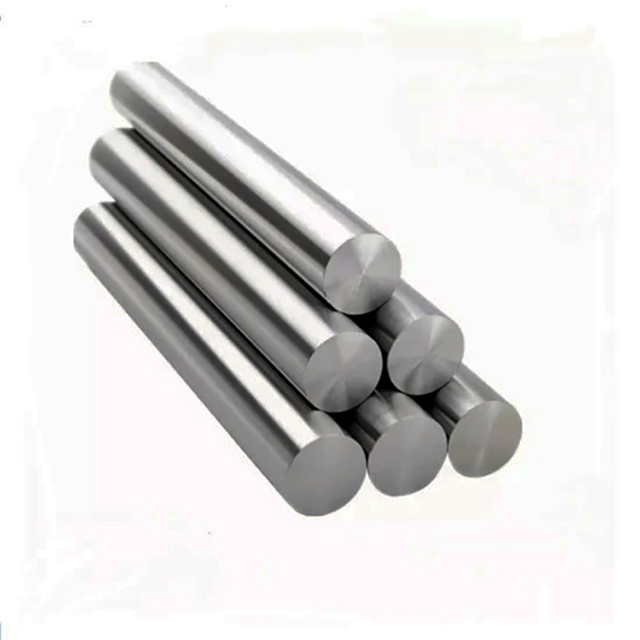


AISI 440C DIN 1.4125
Qilu
Product Description
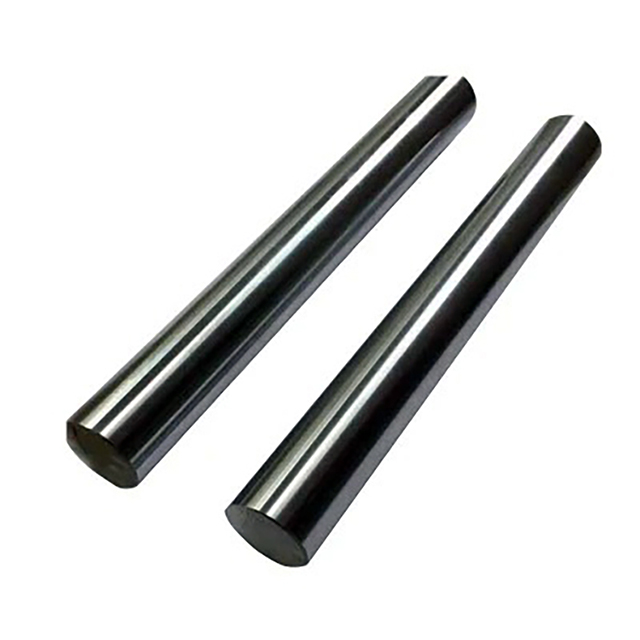
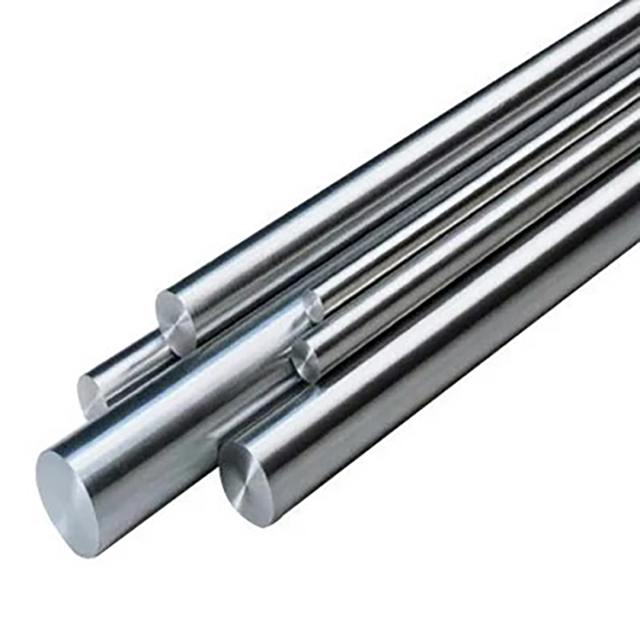
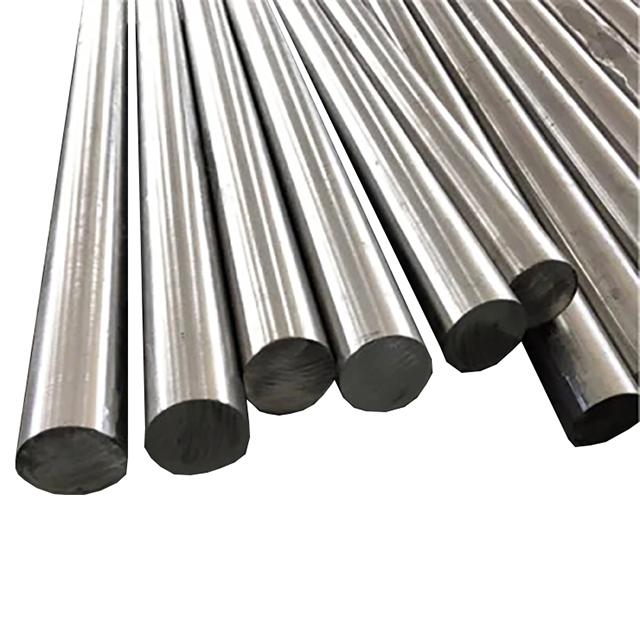
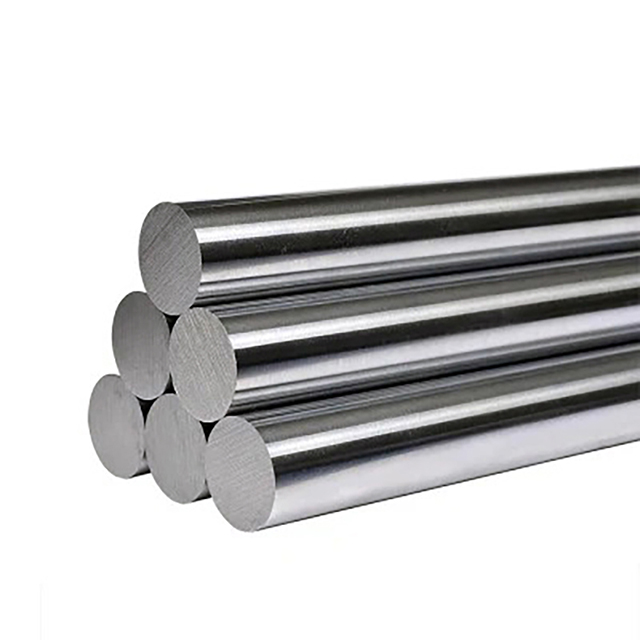
Hot rolled, forged and cold drawn 440C round bar from 6 mm to 150 mm, supplied spheroidise annealed for machining or hardened and tempered to 58 – 60 HRC. The highest-hardness stainless steel in common use, specified wherever a component has to resist wear and corrosion at the same time.
Equivalent to: AISI / SAE 440C (UNS S44004, ASTM A276) · EN 1.4125 / X105CrMo17 (EN 10088-3) · JIS SUS440C (G4303) · GB/T 1220 9Cr18Mo · AMS 5630 / AMS 5880
AISI 440C / SUS440C / 1.4125 High-Carbon Martensitic Stainless Steel Round Bar
AISI 440C / SUS440C / 1.4125 High-Carbon Martensitic Stainless Steel Round Bar
AISI 440C / SUS440C / 1.4125 High-Carbon Martensitic Stainless Steel Round Bar
Supply form — Round bar — peeled, turned or centreless ground
Process — Hot rolled / forged / cold drawn
Condition — Spheroidise annealed for machining, or hardened and tempered (58 – 60 HRC)
Diameter range — 6 – 150 mm
Melting route — EAF + LF + VD; vacuum degassed for bearing quality
Standards — ASTM A276 / A484, EN 10088-3, JIS G4303, AMS 5630
Certificate — EN 10204 3.1 as standard, 3.2 on request
Lead time — 20 – 35 days depending on size and heat treatment
440C is the top of the 440 family and the only one of the three that is normally specified by hardness rather than by strength. Carbon at 0.95 – 1.20 % is the highest of any standard martensitic stainless grade, and that carbon is what allows the steel to hold a 58 – 60 HRC working surface after a proper oil quench. Chromium is pushed to 16.0 – 18.0 %, higher than 420, precisely because so much chromium is consumed as carbide to support that hardness — the extra chromium is there to leave enough in solution to maintain a passive film. Molybdenum is the other deliberate addition: ASTM A276 caps it at 0.75 % while EN 10088-3 specifies 0.40 – 0.80 % for 1.4125. Molybdenum raises resistance to pitting and contributes secondary hardening during tempering, which is why 440C holds hardness better than a plain high-carbon martensitic grade at the same temper. The consequence of this chemistry has to be stated plainly: 440C is the least corrosion-resistant of the stainless grades customers routinely ask for. It is far ahead of carbon tool steel, but it is not a 304 and should not be sold as one.
| Element (%) | 440C (ASTM A276 / UNS S44004) | EN 1.4125 / X105CrMo17 | JIS SUS440C (G4303) |
|---|---|---|---|
| Carbon (C) | 0.95 – 1.20 | 0.95 – 1.20 | 0.95 – 1.20 |
| Silicon (Si) | 1.00 max | 1.00 max | 1.00 max |
| Manganese (Mn) | 1.00 max | 1.00 max | 1.00 max |
| Phosphorus (P) | 0.040 max | 0.040 max | 0.040 max |
| Sulfur (S) | 0.030 max | 0.030 max | 0.030 max |
| Chromium (Cr) | 16.00 – 18.00 | 16.00 – 18.00 | 16.00 – 18.00 |
| Molybdenum (Mo) | 0.75 max | 0.40 – 0.80 | 0.75 max |
440C is bought annealed and then hardened, because at 58 – 60 HRC it is close to unmachinable except by grinding. The annealed condition is the one that has to be workable: at roughly 269 HBW maximum the bar turns, mills and drills with carbide tooling at moderate speeds and generous coolant, and it is the spheroidised structure that makes that possible — do not accept coarsely annealed bar and then wonder why it chatters. After hardening and tempering the strength moves into a different class, above 2000 MPa at a 200 °C temper with elongation down to about 4 %. Those numbers are the reason 440C is used in compression and wear rather than in bending or impact: it is a bearing and edge material, not a structural one. Tempering temperature is again the control, and note how flat the hardness curve is across the useful range — between a 200 °C and a 370 °C temper, hardness falls only from about 59 to 56 HRC while ductility improves. There is little reason to temper at the bottom of the range unless the application really is a cutting edge.
| Condition | Tensile Rm (MPa) | Proof Rp0.2 (MPa) | Elongation A (%) | Hardness |
|---|---|---|---|---|
| Spheroidise annealed (for machining) | 758 | 448 | 14 | ≤ 269 HBW (≤ 285 HBW cold drawn) |
| Q&T, tempered 204 °C | 2030 | 1900 | 4 | 59 HRC |
| Q&T, tempered 260 °C | 1960 | 1830 | 4 | 57 HRC |
| Q&T, tempered 316 °C | 1860 | 1740 | 4 | 56 HRC |
| Q&T, tempered 371 °C | 1790 | 1660 | 4 | 56 HRC |
| Standard | Designation | Notes |
|---|---|---|
| ASTM A276 / A484 (US) | 440C / UNS S44004 | Bar stock |
| EN 10088-3 (EU) | X105CrMo17 / 1.4125 | Molybdenum 0.40 – 0.80 % |
| JIS G4303 (JP) | SUS440C | Molybdenum 0.75 % max |
| GB/T 1220 (CN) | 9Cr18Mo | Near equivalent |
| AMS 5630 / AMS 5880 (aerospace) | 440C | Bearing and instrument quality |
Precision bearings — balls, rollers and races for instrument and aerospace assemblies that must resist corrosion with little or no lubrication
Valve and pump components — seats, stems, needles and pump parts running in water, steam and mildly corrosive fluids
Cutting edges — premium knife blades, industrial slitter and doctor blades where edge retention governs tool life
Moulds, dies and gauges — inserts, gauge blocks and dies that need hardness with good polishability and no coating
Nozzles, shafts and bushings — wear parts in instrument and fluid-handling equipment where surface hardness drives the design
Surgical and dental cutting instruments — scissors, reamers and cutting tools that are hardened, ground and passivated
440C rewards a controlled cycle and punishes improvisation. Start from spheroidise annealed bar, machine to within grinding allowance, then austenitise in the 1010 – 1065 °C range. This is the critical step: the chromium carbides have to dissolve, but the steel is very prone to decarburisation at these temperatures, so a vacuum or properly controlled atmosphere furnace is effectively mandatory. A decarburised surface will not reach hardness and also loses corrosion resistance, and no amount of tempering will recover it. Quench in oil — air cooling is reliable only on very small sections — and consider a sub-zero treatment at about −75 °C immediately after the quench, which converts retained austenite to martensite, adds one to two points of hardness and, more importantly, stops the part growing in service. Temper at 150 – 370 °C, preferably in two cycles, to relieve stress and stabilise the structure, then grind rather than turn the final surface. As with the other martensitic grades, welding is not an option: 440C carries the highest carbon of any standard stainless grade and a weld zone will crack.
Most suppliers in this business are traders who subcontract everything. We run our own processes, which means shorter cycles and one point of accountability when something needs fixing.
Heat treatment shop — quenching and tempering to your target hardness, with furnace charts recorded per batch
Machining shop — rough turning, peeling and cutting to length, so your bar arrives ready for finish machining
Testing — ultrasonic per ASTM A388 / EN 10228-3, hardness mapping across the section, tensile and impact testing
Certification — EN 10204 3.1 as standard, 3.2 available with third-party witness (ABS, BV, CCS, GL)
Export packing — bundled, end-capped and rust-protected for sea freight
They are near equivalents, not identical specifications. ASTM 440C / UNS S44004 and JIS SUS440C both allow molybdenum up to 0.75 %, while EN 1.4125 (X105CrMo17) specifies 0.40 – 0.80 %. The Chinese 9Cr18Mo designation in GB/T 1220 covers the same family. A heat made to any of these will behave the same way in a bearing or a blade, but if the drawing calls up a specific standard the certificate has to be issued against that standard, and substitution should be agreed in writing rather than assumed.
Normally 58 – 60 HRC after a standard oil quench and a low temper. With a sub-zero treatment to convert retained austenite, well-controlled material can reach about 60 – 62 HRC, the highest hardness available from a standard stainless steel. That is the reason the grade exists, and it comes with roughly 4 % elongation, so the component must be designed to take its load in compression or wear rather than in bending or impact.
Because of the carbon. Every point of carbon ties up chromium as chromium carbide, and chromium bound in carbide cannot form the passive oxide film that protects the surface. At 0.95 – 1.20 % carbon there is a great deal of carbide, so 16 – 18 % chromium leaves comparatively little in solid solution. The martensitic structure also lacks the chromium-rich grain boundary network that helps stop a pit propagating in the austenitic grades. 440C is comfortable in fresh water, mild acids and food environments, and unsuitable for seawater and chloride-rich duty.
Only where corrosion resistance rather than load capacity decides the choice. 52100 / 100Cr6 is a through-hardening bearing steel with a substantially higher fatigue rating and a much lower cost per tonne, and it remains the correct choice for bearing duty in clean oil. 440C is used where the bearing has to survive moisture, condensation or wash-down, and where reduced rolling contact fatigue performance is an acceptable trade. The two grades are not interchangeable on load rating alone.
See also our related pages: AISI 420 / SUS420J1 martensitic stainless round bar and AISI 431 / SUS431 stainless round bar and 52100 vs SUJ2 vs 100Cr6 bearing steel equivalents.
Send us your diameter, length, quantity, required hardness and destination port. You will get a quotation with the full technical proposal within 24 hours.
Email: enquiry@qilumetal.com | Web: www.qilumetal.com


