






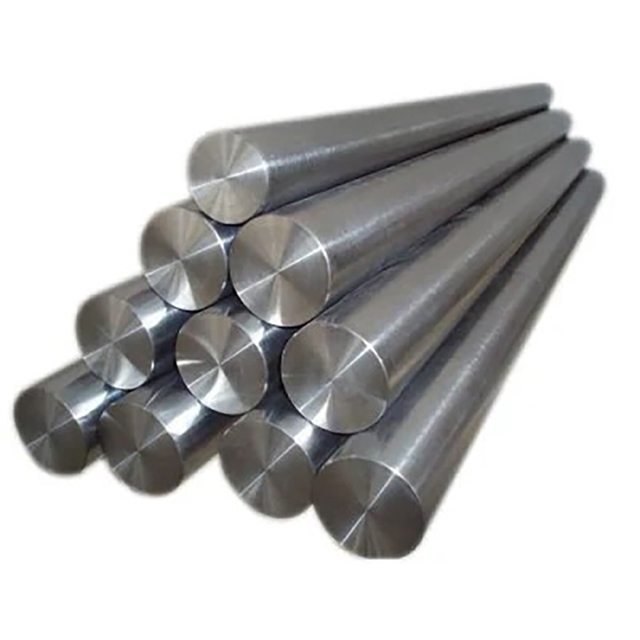

AISI 410 JIS SUS410 DIN 1.4006
Qilu
Product Description
Hot rolled, forged or cold drawn 410 round bar from 6 mm to 200 mm, supplied annealed for machining or quenched and tempered to your target hardness. The general-purpose martensitic stainless grade — hardenable, magnetic, and the most economical stainless bar that will take a wear surface.
Equivalent to: AISI 410 (UNS S41000, ASTM A276 / A479) · EN 1.4006 / X12Cr13 (EN 10088-3) · JIS SUS410 (G4303) · GB/T 1220 12Cr13 · BS 410S21
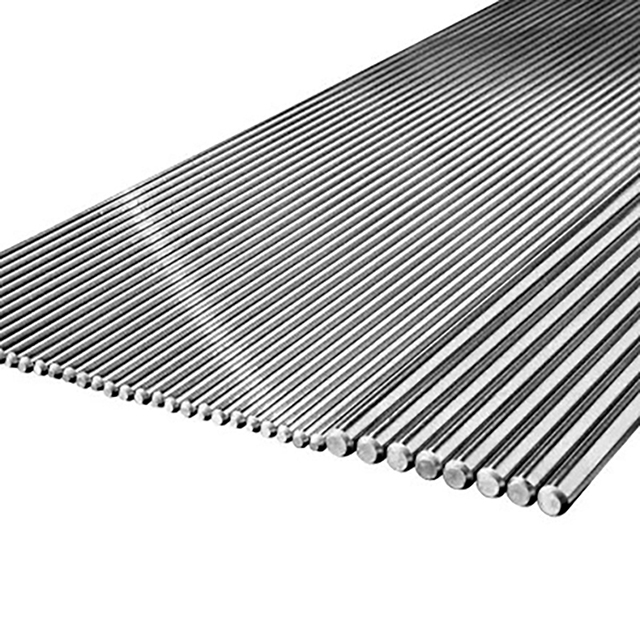
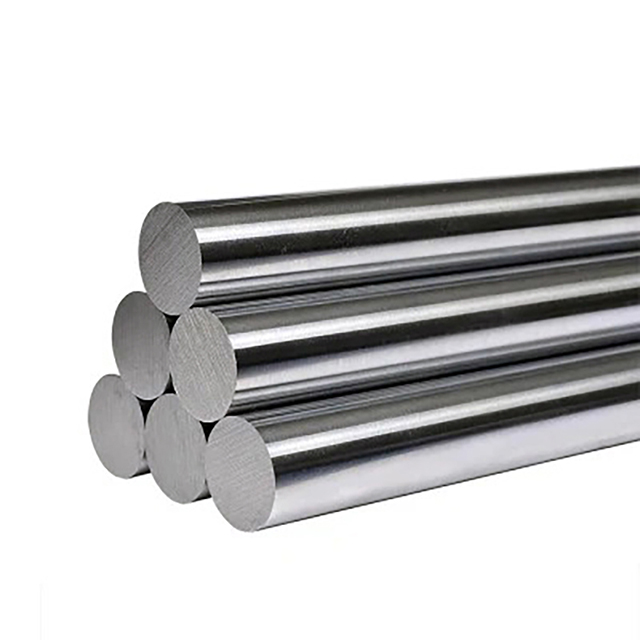
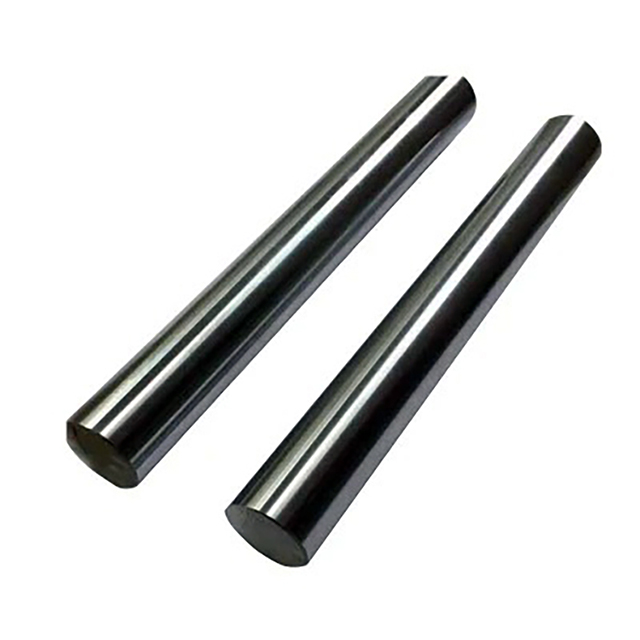
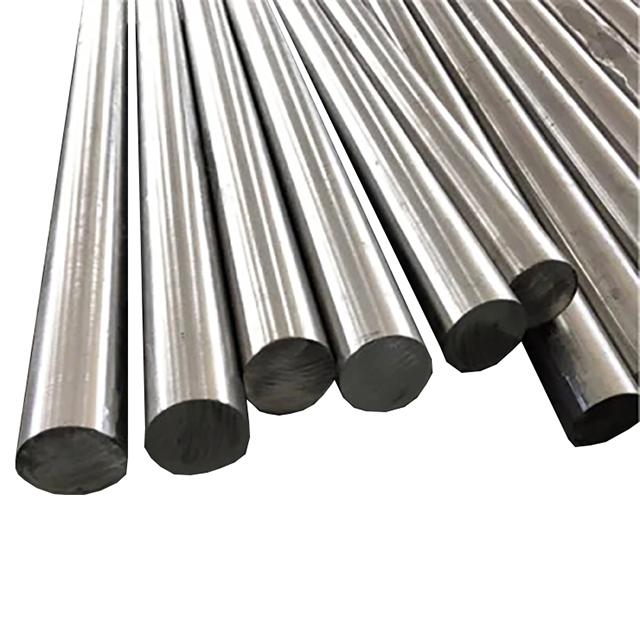
AISI 410 / SUS410 Martensitic Stainless Steel Round Bar
AISI 410 / SUS410 Martensitic Stainless Steel Round Bar
AISI 410 / SUS410 Martensitic Stainless Steel Round Bar
Supply form — Round bar, flat bar, hexagon and square
Process — Hot rolled / forged; cold drawn or centreless ground for close tolerance
Condition — Annealed (+A) for machining; quenched and tempered (+QT) to specified hardness
Diameter range — 6–200 mm (hot rolled / forged); 3–100 mm (cold drawn / ground)
Melting route — EAF + LF; ESR on request for cleaner steel
Standard — ASTM A276 / A479, EN 10088-3, JIS G4303, GB/T 1220
Certificate — EN 10204 3.1 standard, 3.2 on request
Lead time — 15–30 days
410 is the base grade of the martensitic family: about 12 % chromium for atmospheric and fresh-water corrosion resistance, and enough carbon — up to 0.15 % — to respond to quenching. That carbon is the whole point of the grade. It is what allows a 410 bar to be hardened and tempered to a wear-resistant surface, which no austenitic grade such as 316 can do.
The price of that hardenability is two compromises the buyer should understand before ordering. First, corrosion resistance is well below the austenitic grades — 410 is a mild-service steel, not a marine one. Second, the martensitic structure is ferromagnetic in every condition, annealed or hardened, so it cannot be used where non-magnetic behaviour is required.
| Element (%) | AISI 410 (S41000) | EN 1.4006 (X12Cr13) | JIS SUS410 |
|---|---|---|---|
| Carbon (C) | ≤ 0.15 (typically 0.08–0.15) | 0.08–0.15 | ≤ 0.15 |
| Manganese (Mn), max | 1.00 | 1.50 | 1.00 |
| Silicon (Si), max | 1.00 | 1.00 | 1.00 |
| Phosphorus (P), max | 0.040 | 0.040 | 0.040 |
| Sulfur (S), max | 0.030 | 0.015 | 0.030 |
| Chromium (Cr) | 11.50–13.50 | 11.5–13.5 | 11.50–13.50 |
| Nickel (Ni), max | 0.75 | 0.75 | — |
The EN variant keeps sulfur tighter (0.015 % against 0.030 %) and allows more manganese, but the chromium and carbon windows are the same — 410 and 1.4006 are interchangeable for practical purposes. Grades that steer you elsewhere are covered by the higher-carbon AISI 420 / SUS420J1 when more hardness is needed, and by AISI 430 when corrosion resistance matters more than hardenability.
For a martensitic grade, mechanical properties are set by heat treatment rather than by composition, so the correct starting point is the ASTM A276 condition table. Condition A is annealed bar for machining; condition T is quenched and tempered for strength; condition H is a higher-strength temper. Hot-finished and cold-finished bar carry slightly different elongation minimums for the same condition.
| ASTM A276 condition | Tensile Rm, min | Yield Rp0.2, min | Elongation, min | Hardness |
|---|---|---|---|---|
| A — annealed, hot finished | 480 MPa | 275 MPa | 20 % | ≤ 217 HBW |
| A — annealed, cold finished | 480 MPa | 275 MPa | 16 % | ≤ 217 HBW |
| T — quenched & tempered, hot finished | 690 MPa | 550 MPa | 15 % | 25–31 HRC |
| T — quenched & tempered, cold finished | 690 MPa | 550 MPa | 12 % | 25–31 HRC |
| H — higher strength, hot finished | 830 MPa | 620 MPa | 12 % | — |
The European specification quotes the tempered condition as a band: EN 10088-3 1.4006 in the +QT700 condition requires at least 690 MPa tensile, 515 MPa yield and 15 % elongation, in a hardness range of 207–235 HBW. If your drawing calls up a strength class rather than a grade name, this is the table to match it against.
410 hardens by quenching from roughly 925–1010 °C and then softening in the temper to the working condition. Higher tempering temperature trades strength for toughness — but not through the whole range: 410 suffers temper embrittlement between roughly 425 and 600 °C, so that window should be avoided whenever impact resistance matters.
| Tempering temperature | Tensile Rm | Yield Rp0.2 | Elongation | Hardness |
|---|---|---|---|---|
| 204 °C (as-quenched temper) | ≈ 1475 MPa | ≈ 1005 MPa | ≈ 11 % | ≈ 400 HB |
| 427 °C | ≈ 1340 MPa | ≈ 920 MPa | ≈ 18 % | ≈ 405 HB |
| 538 °C | ≈ 985 MPa | ≈ 730 MPa | ≈ 16 % | ≈ 321 HB |
| 593 °C | ≈ 870 MPa | ≈ 675 MPa | ≈ 20 % | ≈ 255 HB |
Values marked ≈ are typical for oil-quenched and tempered bar of conventional section; the certified figures for a specific order are those reported on the EN 10204 3.1 certificate for that heat. Maximum achievable hardness in 410 is in the region of 40–45 HRC — genuinely harder than austenitic grades, but below what the higher-carbon 420 or the 440C type can reach.
| Standard | Designation | UNS / Material No. |
|---|---|---|
| ASTM A276 / A479 (US) | 410 | S41000 |
| EN 10088-3 (EU) | X12Cr13 | 1.4006 |
| JIS G4303 (JP) | SUS410 | — |
| GB/T 1220 (CN) | 12Cr13 | — |
| BS 970 (UK) | 410S21 | — |
| Cast equivalent (ASTM A217 / A487) | CA15 | — |
Pumps & valves — shafts, stems, seats and impellers for mildly corrosive service
Cutlery & hand tools — blades and tools that need a hard, edge-holding surface
Power generation — steam and gas turbine components, and high-temperature fasteners to 650 °C
Automotive & fasteners — high-strength bolts, screws, bushings and exhaust components
General engineering — wear plates, spindles, mould and die components where 304 would be too soft
Soft annealing — 815–870 °C then slow cool — restores machinability and relieves work hardening
Austenitising — ≈ 925–1010 °C, then air or oil quench depending on section
Tempering — 150–650 °C depending on the target strength; avoid roughly 425–600 °C where impact resistance matters
Stress relief — below the tempering temperature for machined parts, to hold straightness
Weldability — limited — preheat and post-weld heat treatment required; 410 is not a fabrication grade
Two practical points from our own shop. Bar is normally supplied soft annealed so the customer can machine the finished geometry before hardening; where the part will be machined after hardening instead, we supply pre-hardened to the drawing hardness with a controlled stock allowance. And because 410 is magnetic in all conditions, magnetic particle inspection is available on every heat if the application is safety-related.
Melt & roll — EAF + LF + AOD refining; hot rolled, forged or cold drawn bar from 6 mm to 200 mm
Conditioning — peeled, ground or polished bar so the surface is clean enough for direct machining
Machining shop — rough turning, cutting to length and centreless grinding in our own shop
Testing — tensile and hardness per heat, ultrasonic per ASTM A388 / EN 10228-3, PMI and dimensional check
Certification — EN 10204 3.1 as standard, 3.2 with third-party witness (ABS, BV, CCS, GL)
Export packing — bundled, end-capped and rust-protected for sea freight
Yes — 410 is ferromagnetic in both the annealed and the hardened condition. If the application requires non-magnetic material, you need an austenitic grade such as 316 or 304, not 410.
No. 410 tops out around 40–45 HRC, which is enough for shaft and valve work but not for cutting edges that must hold at high hardness. 420 / SUS420J1 carries more carbon and reaches higher hardness; 440C goes further again. If you are choosing between them, send the required hardness and we will confirm which grade your process can actually hit.
It resists the atmosphere, fresh water and mild chemicals, but it is not a marine grade. Coastal or chloride-bearing environments call for a molybdenum grade such as 316. The comparison between the austenitic choices is in our 304 vs 316 article.
Annealed if the part will be machined and then hardened in your own shop; quenched and tempered to a specified hardness if the geometry is near finished and you want to minimise distortion. Tell us the working diameter and the target hardness and we will quote the right condition.
Send the diameter, length, quantity, required condition and whether the bar will be machined or heat treated after delivery. You will get a quotation with the full technical proposal within 24 hours.
Email: enquiry@qilumetal.com | Web: www.qilumetal.com


