






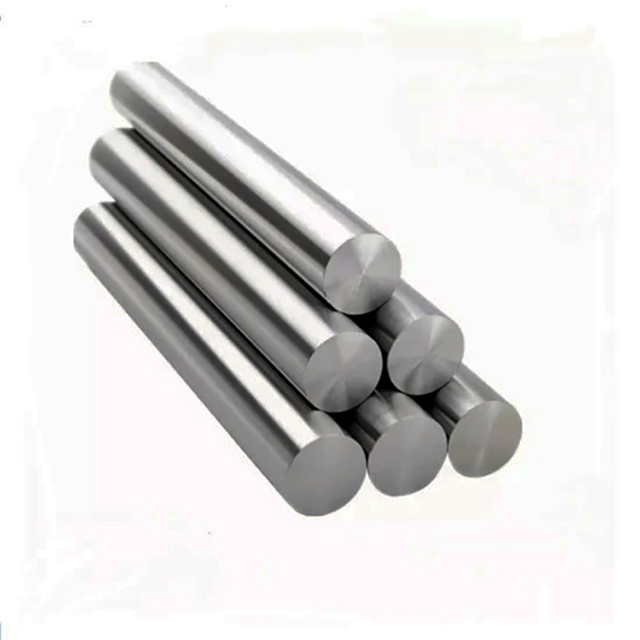

AISI 630 JIS SUS630 DIN 1.4542
Qilu
Product Description
Hot rolled, forged and peeled 630 (17-4PH) round bar from 12 mm to 300 mm, supplied in solution annealed condition A or aged to H900 / H1025 / H1075 / H1150 with EN 10204 3.1 certificate. A copper-niobium precipitation hardening martensitic stainless that reaches 1310 MPa tensile without a quench — the grade for valve stems, pump shafts and high-strength fasteners that must not distort in heat treatment.
Equivalent to: AISI / SAE 630, 17-4PH (UNS S17400, ASTM A564 / A693) · EN 1.4542 / X5CrNiCuNb16-4 (EN 10088-3) · JIS SUS630 (G4303) · GB/T 1220 05Cr17Ni4Cu4Nb
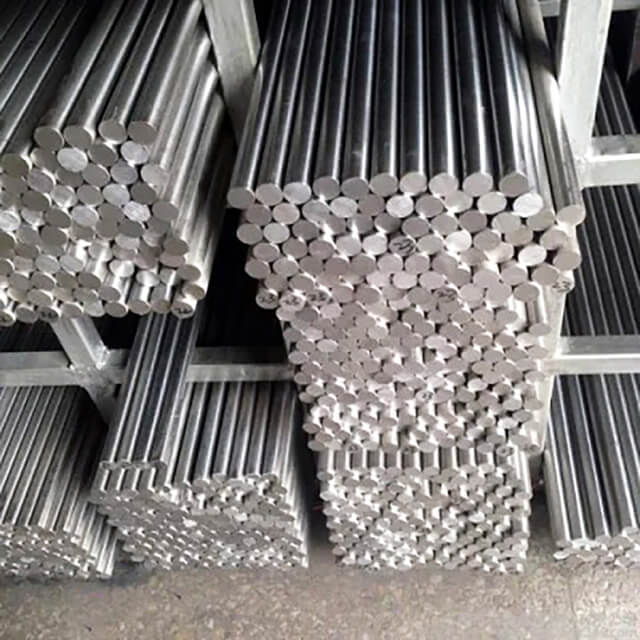
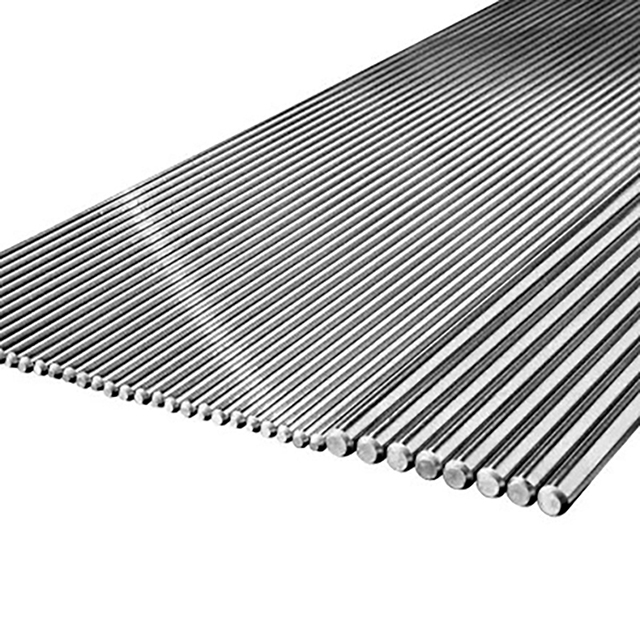
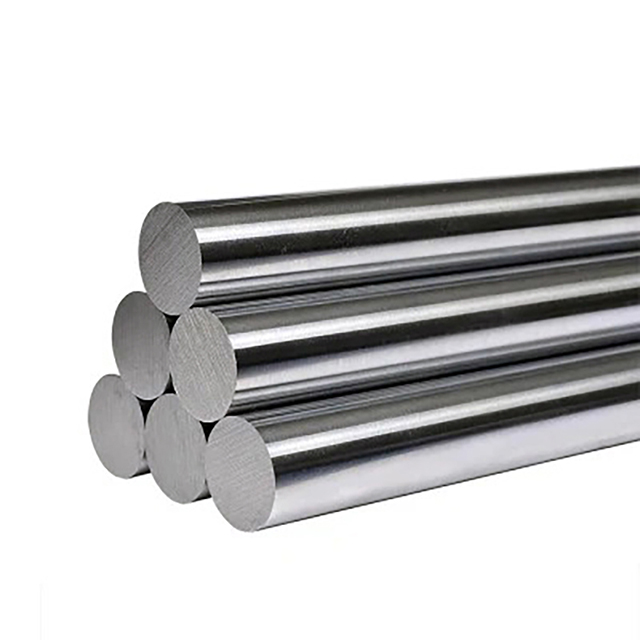
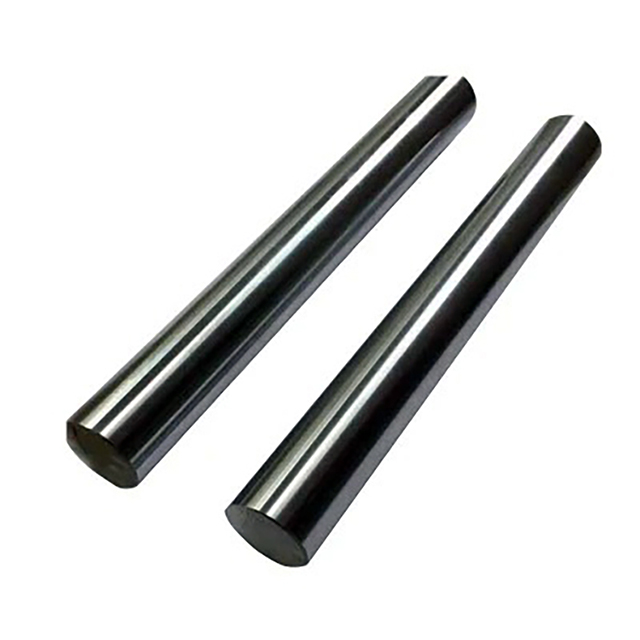
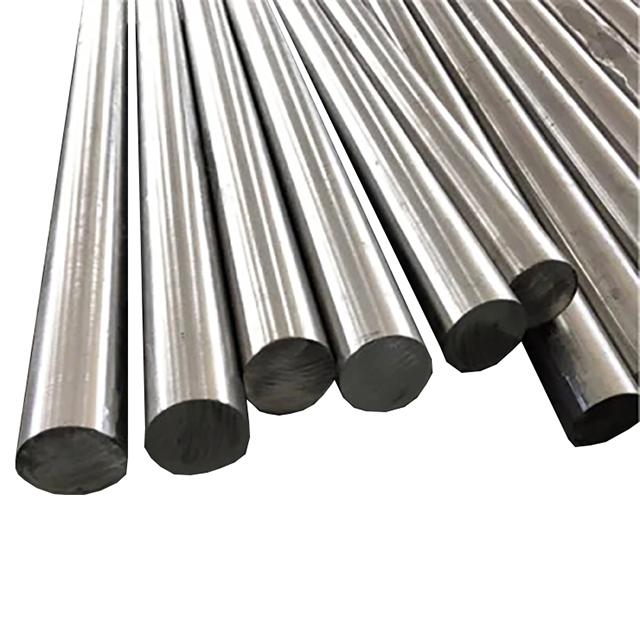
AISI 630 / 17-4PH / 1.4542 Precipitation Hardening Stainless Steel Round Bar
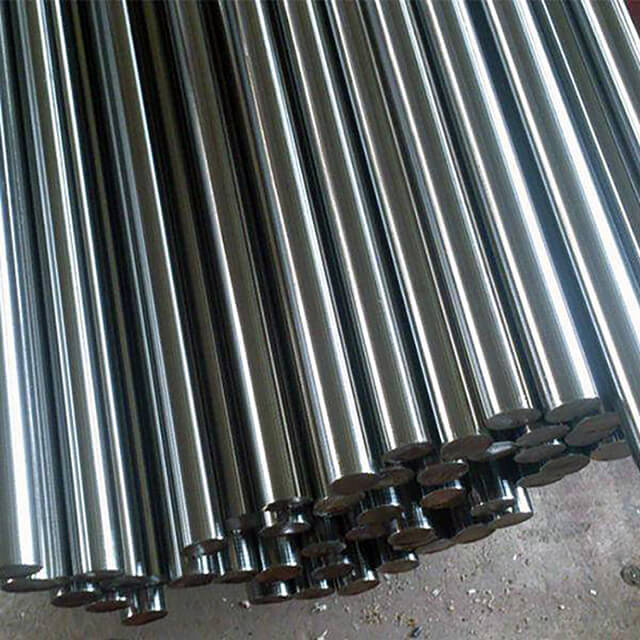
630 bar in condition A, machinable before ageing
Product form: hot rolled bar, forged bar, peeled bar, ground bar
Diameter range: 12 mm – 300 mm; lengths 3–6 m or cut to size
Delivery condition: solution annealed (condition A), or aged H900 / H1025 / H1075 / H1150
Production route: EAF + AOD + vacuum degassing, hot rolling or forging, solution treatment, ageing
Standards: ASTM A564 / A693, EN 10088-3 (1.4542), JIS G4303 (SUS630), GB/T 1220
Certificates: EN 10204 3.1 with chemistry and mechanical results per heat; 3.2 on request
Testing: tensile, hardness, PMI; UT to EN 10228-3 or ASTM A388 by agreement
Lead time: stock sizes ex-warehouse; aged production 25–35 days depending on size and condition
630 is a 17% chromium martensitic stainless with three deliberate additions. Nickel at 3.00–5.00% holds the structure austenitic at solution temperature and lets it transform to martensite on cooling to room temperature. Copper at 3.00–5.00% is the precipitation former: during ageing it comes out of solution as fine copper-rich particles that strain the lattice and raise strength. Niobium (columbium) at 0.15–0.45% forms NbC, which pins grain growth during the solution treatment and keeps the aged strength consistent from bar to bar.
| Element | C | Mn | Si | P | S | Cr | Ni | Cu | Nb+Ta |
|---|---|---|---|---|---|---|---|---|---|
| ASTM A564 (630 / S17400) | 0.07 max | 1.00 max | 1.00 max | 0.040 max | 0.030 max | 15.00–17.50 | 3.00–5.00 | 3.00–5.00 | 0.15–0.45 |
| EN 10088-3 (1.4542) | 0.07 max | 1.50 max | 0.70 max | 0.040 max | 0.015 max | 15.00–17.00 | 3.00–5.00 | 3.00–5.00 | 5×C to 0.45 |
| JIS G4303 (SUS630) | 0.07 max | 1.00 max | 1.00 max | 0.040 max | 0.030 max | 15.00–17.50 | 3.00–5.00 | 3.00–5.00 | 0.15–0.45 |
The EN version is not identical to the ASTM version: manganese is allowed up to 1.50% and silicon is capped lower at 0.70%, sulfur is tighter at 0.015%, and the niobium is written as a function of carbon rather than a fixed window. In practice a heat made to A564 sits comfortably inside 1.4542, but the reverse is not always true on the niobium clause, which is why we check the actual certificate against the drawing rather than assuming interchangeability.
The point of 630 is that strength is set by an ageing temperature, not by a quench. The bar is solution treated at around 1040 °C, cooled to room temperature to form martensite, then aged for a few hours. Higher ageing temperature gives lower strength and higher toughness; the four standard conditions cover most drawings.
| Condition | Ageing temperature | Tensile, Rm | Yield, Rp0.2 | Elongation, A |
|---|---|---|---|---|
| Condition A (solution annealed) | — | Supplied for machining; hardened by subsequent ageing | — | — |
| H900 | 480 °C (900 °F) | 1310 MPa min | 1170 MPa min | 10 % min |
| H1025 | 550 °C (1025 °F) | 1070 MPa min | 1000 MPa min | 12 % min |
| H1075 | 580 °C (1075 °F) | 1000 MPa min | 860 MPa min | 13 % min |
| H1150 | 620 °C (1150 °F) | 860 MPa min | 725 MPa min | 16 % min |
The values above are the ASTM A564 minimums for bar; hardness is specified by condition in the same standard, with H900 typically landing in the 40–47 HRC band and H1150 around the low 30s. Two engineering notes. First, H900 gives the highest strength but the lowest toughness and the poorest resistance to stress corrosion cracking — for wet, chloride-bearing service the higher ageing temperatures are the safer choice even though the certificate reads lower. Second, ageing shrinks the part slightly; if the drawing has a tight final diameter, machine in condition A leaving an allowance, age, then finish grind.
| Standard | Grade | Material No. / UNS |
|---|---|---|
| ASTM A564 / A693 (USA) | 630, 17-4PH | UNS S17400 |
| EN 10088-3 (Europe) | X5CrNiCuNb16-4 | 1.4542 |
| JIS G4303 (Japan) | SUS630 | — |
| GB/T 1220 (China) | 05Cr17Ni4Cu4Nb (旧 0Cr17Ni4Cu4Nb) | — |
| Aerospace (AMS) | 17-4PH per AMS 5643 (bar) / AMS 5604 (sheet) | — |
A note on the AMS route: aerospace and defence drawings usually call AMS 5643 rather than A564, and the AMS specification adds cleanliness and testing requirements that a commercial A564 heat does not automatically meet. If the drawing cites AMS, say so at enquiry — it changes the melting route and the price, and it is not something to discover after the material has been cut.
Valve stems, valve bodies and trim for oil, gas and process service up to moderate temperature
Pump shafts, impellers and sleeves where high strength and seawater resistance are both needed
High-strength fasteners: bolts, studs and nuts for marine and structural use
Gears, splines and actuator components that must hold tolerances after heat treatment
Aircraft fittings, landing gear components and missile hardware (AMS route)
Moulds and tooling inserts where a polishable, corrosion-resistant, hardenable steel is required
Nuclear and laboratory equipment where cobalt-free stainless is specified
Where 630 is the wrong answer: continuous service above roughly 300 °C (the ageing particles coarsen and strength falls away), strongly oxidising acids, and chloride environments where stress corrosion cracking is a design case — there, a duplex or a higher-alloy austenitic is the correct route. For lower-strength corrosion duty, 316 stainless round bar is cheaper and more forgiving; for a hardenable stainless without the copper addition, 431 (1.4057) stainless round bar covers the QT800 / QT900 range.
Solution treatment. Austenitise at 1038–1066 °C, hold to dissolve the copper and niobium phases, then cool fast enough to miss the annealing range. The critical detail is the finish temperature: the bar must cool below about 32 °C before ageing, otherwise retained austenite survives and the aged strength comes out low and inconsistent. In our shop that means a controlled cooling section, not a stack of bars left to equalise in the yard.
Ageing. Hold at the condition temperature — 480 °C for H900, 550 °C for H1025, 580 °C for H1075, 620 °C for H1150 — for one hour at the low end and around four hours at the higher temperatures, then air cool. Ageing is a precipitation reaction, not a quench-and-temper cycle; there is no rapid cooling step and therefore very little distortion compared with 431 or 440C.
Machining sequence. Machine in condition A wherever possible: the solution annealed structure cuts like a 17% chromium martensitic stainless, whereas the aged conditions are abrasive and slow. Typical route for a precision part is machine in A with an allowance → age → finish machine or grind. Ageing shrinkage is small but not zero, so tolerances tighter than about 0.05 mm should be taken after ageing.
Welding. 630 welds well by comparison with other martensitic grades. No preheat is normally needed for thin sections, interpass temperature should be kept low, and the assembly is aged after welding to restore properties in the heat-affected zone. Filler selection follows the base metal or an over-alloyed austenitic consumable, depending on whether the joint must match strength.
Solution annealing and ageing furnaces with recorded cycles and calibrated thermocouples
Peeling, grinding and cut-to-length for bar going straight into machining
Tensile and hardness testing per heat and per ageing lot, reported on the 3.1 certificate
PMI / XRF verification — 630 and 17-4PH are frequently confused with 431 and 316 in mixed stock
UT to EN 10228-3 or ASTM A388 by agreement for pressure and shaft applications
ISO 9001 certified; ABS / BV / CCS / DNV survey experience
Export packing with heat number traceability kept through bundling and shipment
Yes. 17-4PH is the trade name, 630 is the AISI/SAE designation, UNS S17400 is the unified number, 1.4542 is the EN material number and SUS630 is the JIS grade. They refer to the same chemistry within the tolerances discussed above.
Yes, in both condition A and the aged conditions. It is martensitic, so magnet response is expected. A non-magnetic "630" bar has either been substituted or left in an improper solution condition.
H900 if the part is strength-driven and dry. H1025 or H1075 if it must also resist cracking in wet or slightly chloride-bearing service. H1150 where toughness and stress corrosion resistance matter more than the last 300 MPa, which is common on valve and pump components.
Only with care. The copper-rich precipitates coarsen with time at temperature and strength drops; long exposure above roughly 300 °C also reduces toughness. For sustained high-temperature service, a different alloy family should be selected rather than relying on 630 at the edge of its range.
Yes. Every bundle is marked with the heat number, and the 3.1 certificate covers chemistry, mechanical results and the ageing condition. If you need the tolerance class and surface finish specified as well, our guide to bar condition and tolerance class explains how to write that on the order.
Send diameter, length, condition (A / H900 / H1025 / H1075 / H1150), drawing standard and quantity to enquiry@qilumetal.com. We quote AISI 630 / 17-4PH / 1.4542 round bar with EN 10204 3.1 certificates, in-house solution treatment and ageing, and we confirm test requirements against the drawing before the heat is released.


