






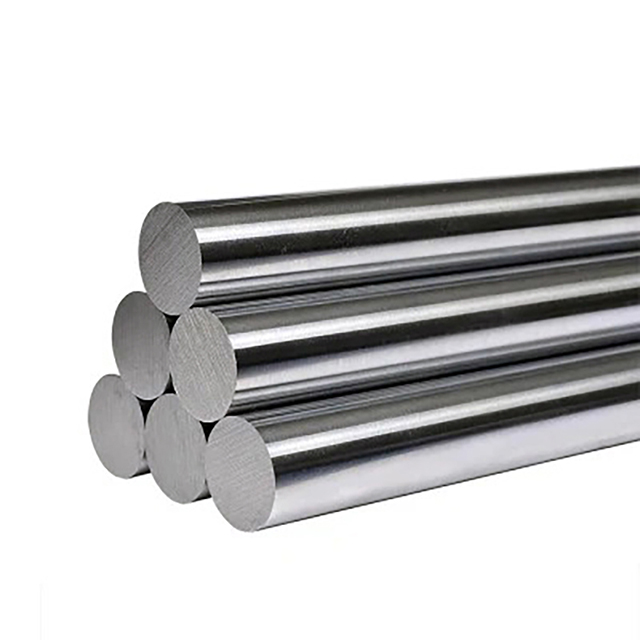

AISI 316 JIS SUS316 DIN 1.4401
Qilu
Product Description
Solution annealed 316 round bar from 6 mm to 200 mm, hot rolled, forged or cold drawn. The standard 16Cr-10Ni-2Mo austenitic grade — better pitting and crevice corrosion resistance than 304 thanks to the molybdenum addition — supplied with EN 10204 3.1 certification.
Equivalent to: AISI 316 (UNS S31600, ASTM A276 / A240) · EN 1.4401 / 1.4436 (EN 10088-3) · JIS SUS316 (G4303) · GB/T 1220 06Cr17Ni12Mo2 · BS 316S31
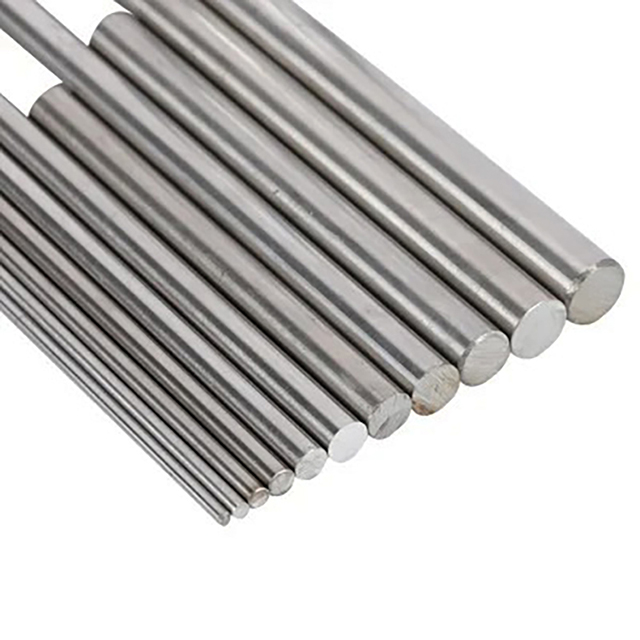
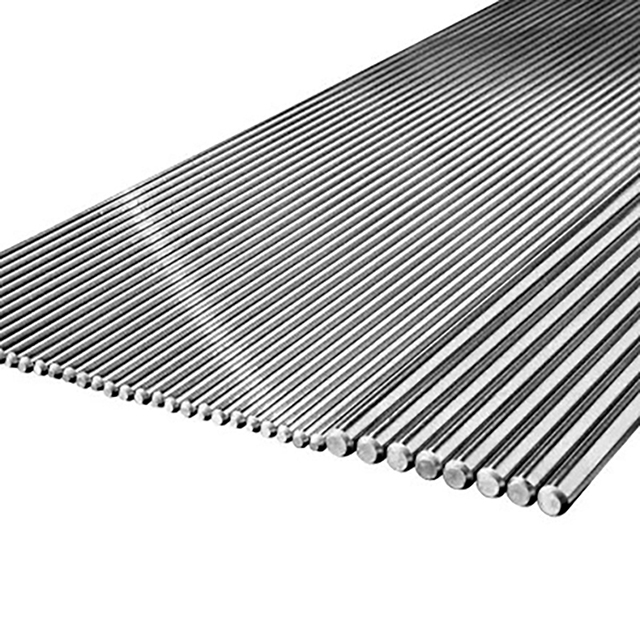
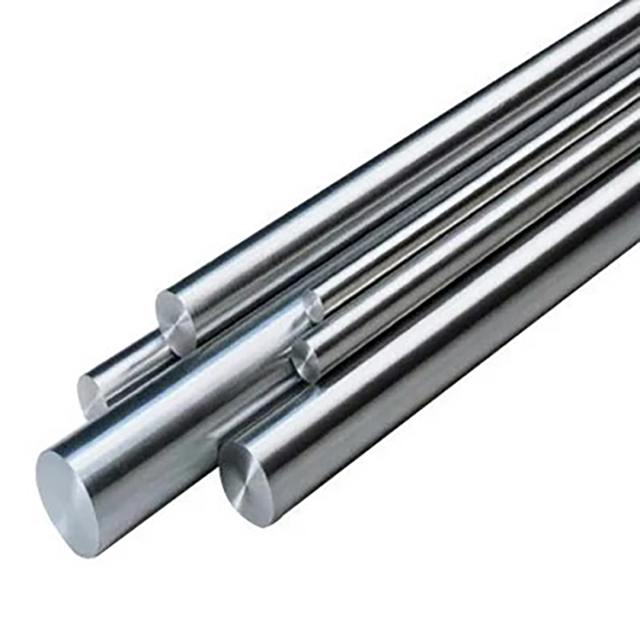
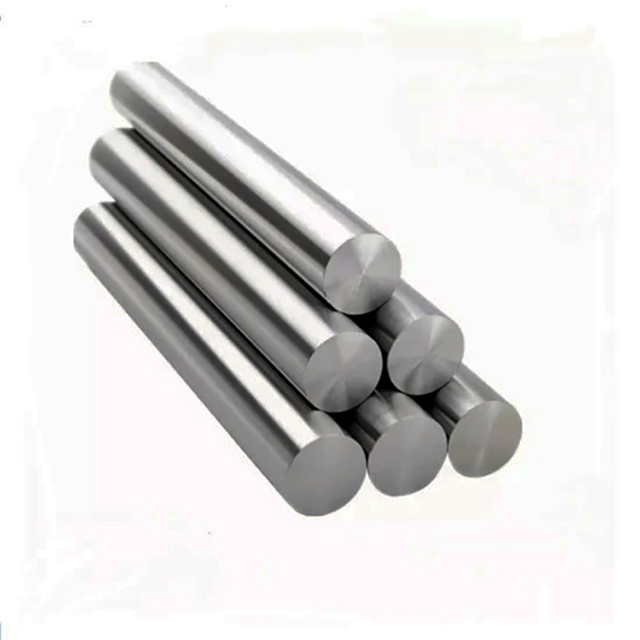
AISI 316 / SUS316 Stainless Steel Round Bar
AISI 316 / SUS316 Stainless Steel Round Bar
AISI 316 / SUS316 Stainless Steel Round Bar
Supply form — Round bar, flat bar, hexagon and square
Process — Hot rolled / forged; cold drawn for close tolerance and bright surface
Condition — Solution annealed (pickled or peeled); cold drawn as option
Diameter range — 6–200 mm (hot rolled / forged); 3–80 mm (cold drawn)
Melting route — EAF + LF + AOD
Standard — ASTM A276 / A240 / A479, EN 10088-3, JIS G4303, GB/T 1220
Certificate — EN 10204 3.1 standard, 3.2 on request
Lead time — 15–30 days
The molybdenum is what separates 316 from 304. Two to three percent Mo raises the pitting resistance equivalent — roughly Cr + 3.3 Mo + 16 N — from about 18 in 304 to about 25 here, which is the difference between a grade that tolerates fresh water and one that survives chlorides, coastal atmospheres and most process streams. The trade-off is price: molybdenum is the most expensive element in the analysis and it is the reason 316 costs noticeably more than 304 for nominally similar nickel and chromium.
| Element (%) | AISI 316 (S31600) | EN 1.4401 | EN 1.4436 | JIS SUS316 |
|---|---|---|---|---|
| Carbon (C), max | 0.08 | 0.07 | 0.05 | 0.08 |
| Manganese (Mn), max | 2.00 | 2.00 | 2.00 | 2.00 |
| Silicon (Si), max | 1.00 | 1.00 | 1.00 | 1.00 |
| Phosphorus (P), max | 0.045 | 0.045 | 0.045 | 0.045 |
| Sulfur (S), max | 0.030 | 0.015 | 0.015 | 0.030 |
| Chromium (Cr) | 16.00–18.00 | 16.5–18.5 | 16.5–18.5 | 16.00–18.00 |
| Nickel (Ni) | 10.00–14.00 | 10.0–13.0 | 10.5–13.5 | 10.00–14.00 |
| Molybdenum (Mo) | 2.00–3.00 | 2.00–2.50 | 2.50–3.00 | 2.00–3.00 |
| Nitrogen (N), max | 0.10 | 0.11 | 0.11 | — |
Note that the EN versions split the ASTM molybdenum window in half: 1.4401 sits at the low end (2.0–2.5 % Mo) and 1.4436 at the top (2.5–3.0 % Mo), with a correspondingly higher nickel range. For most applications the choice is commercial rather than metallurgical, but in heavy chloride service the high-molybdenum 1.4436 is the safer of the two.
316 is austenitic and cannot be hardened by heat treatment — strength comes from the annealed structure plus any cold work introduced by drawing or forming. The values below are the annealed minimums of ASTM A276 and JIS G4303. Cold drawing raises yield and tensile appreciably, at the cost of some ductility and a slight magnetic response.
| Property (annealed) | ASTM A276 316 | JIS G4303 SUS316 |
|---|---|---|
| Tensile strength, min | 515 MPa | 520 MPa |
| Yield strength (0.2%), min | 205 MPa | 205 MPa |
| Elongation, min | 40 % | 40 % |
| Reduction of area, min | 50 % | — |
| Hardness, max | 217 HB (95 HRB) | 187 HB |
| Density | 8.00 g/cm³ | 8.00 g/cm³ |
| Modulus of elasticity | 193 GPa | — |
| Melting range | 1375–1400 °C | — |
Impact behaviour is worth a word, because it is where austenitic steel earns its price. 316 stays tough down to cryogenic temperature — it has no ductile-to-brittle transition — which is why it is specified for low-temperature and LNG-adjacent components where a ferritic or martensitic grade would become brittle.
| Standard | Designation | UNS / Material No. |
|---|---|---|
| ASTM A276 / A240 / A479 (US) | 316 | S31600 |
| EN 10088-3 (EU) | X5CrNiMo17-12-2 / X3CrNiMo17-13-3 | 1.4401 / 1.4436 |
| JIS G4303 (JP) | SUS316 | — |
| GB/T 1220 (CN) | 06Cr17Ni12Mo2 | — |
| BS 970 / BS 1449 (UK) | 316S31 / 316S33 | — |
| ISO 683-13 (Intl.) | 316 | — |
Marine & coastal — boat shafts, railings, fasteners and fittings in salt-spray service
Chemical & petrochemical — pump shafts, valve stems, fittings and vessels handling chloride-bearing media
Food, dairy & pharma — pump shafts, agitators and hygienic equipment that is cleaned with aggressive chemicals
Heat exchangers — components where service temperature rules out 304 on creep or scaling grounds
Medical & surgical — instrument components and sterilising equipment requiring repeated exposure to disinfectants
316 is supplied solution annealed at 1040–1080 °C followed by rapid cooling in water or an air jet. That dissolves carbides and restores the full corrosion resistance of the as-rolled structure. The grade is not hardenable by quenching, so cold work is the only strength lever available.
One caution matters more than the rest: standard-carbon 316 and prolonged exposure to 450–850 °C do not mix. Chromium carbides precipitate at the grain boundaries in that window and sensitise the steel, which is exactly the corrosion failure the molybdenum was bought to prevent. Where the part is welded and then exposed to a corrosive medium, specify the low-carbon grade AISI 316L or a titanium-stabilised variant instead of standard 316.
Melt & roll — EAF + LF + AOD refining; hot rolled, forged or cold drawn bar from 6 mm to 200 mm
Conditioning — peeled, ground or polished bar so the surface is clean enough for direct machining
Machining shop — rough turning, cutting to length and centreless grinding in our own shop
Testing — tensile and hardness per heat, ultrasonic per ASTM A388 / EN 10228-3, PMI and dimensional check
Certification — EN 10204 3.1 as standard, 3.2 with third-party witness (ABS, BV, CCS, GL)
Export packing — bundled, end-capped and rust-protected for sea freight
The difference is carbon only: 316 allows up to 0.08 %, 316L caps at 0.030 %. Lower carbon means a welded joint will not sensitise, so 316L is the correct choice for fabricated assemblies and for anything going into an aggressive medium after welding. Standard 316 gives marginally higher strength from its higher carbon. Our AISI 316L page covers the low-carbon variant in detail.
Only where chlorides are present. Seawater, coastal air, brines, bleach and most process chemicals make the molybdenum worth paying for; fresh water, food acids and indoor atmospheres do not. The decision is set out grade by grade in our 304 vs 316 comparison, and the plain 18Cr-8Ni choice is on the AISI 304 page.
Annealed 316 is essentially non-magnetic. Cold drawing or heavy bending converts part of the austenite to martensite and the bar will then pull slightly on a magnet. That is expected behaviour, not a mixed-up heat — if your application has a permeability limit, tell us and we will quote the annealed condition and verify permeability on request.
Yes. Bar can be supplied peeled, ground or polished, cut to length, and with a defined machining allowance — so surface condition and tolerance are controlled in our shop rather than in transit.
Send the diameter, length, quantity, required condition and whether the bar will be machined or heat treated after delivery. You will get a quotation with the full technical proposal within 24 hours.
Email: enquiry@qilumetal.com | Web: www.qilumetal.com


