






| Quantity: | |
|---|---|


52100
Qilu
Product Description
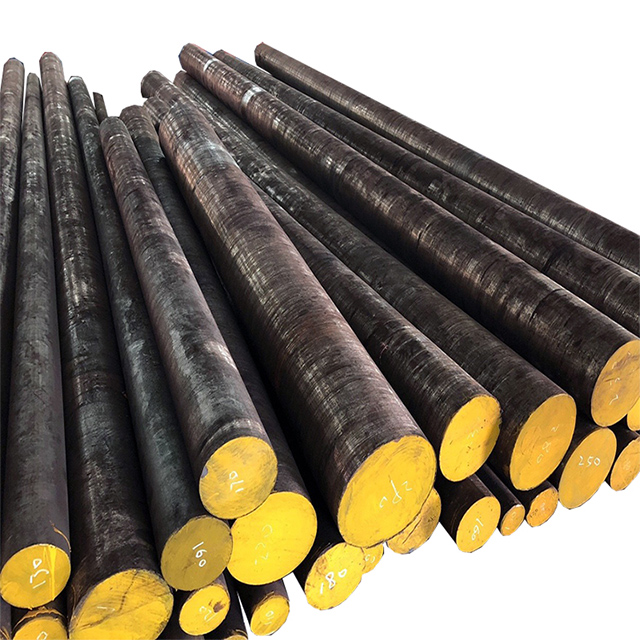
High-carbon chromium bearing steel round bar, hot forged and hot rolled, supplied spheroidize-annealed for machining or quenched & tempered to 58–64 HRC, 20 mm to 400 mm diameter, with ultrasonic testing and rough machining done in our own workshop.
Equivalent to: AISI / SAE 52100 (ASTM A295) · DIN 100Cr6 / 1.3505 · JIS SUJ2 (G4805) · BS 535A99 / EN31 · GB GCr15 (GB/T 18254)
AISI 52100 100Cr6 SUJ2 GCr15 Bearing Steel Round Bar
AISI 52100 100Cr6 SUJ2 GCr15 Bearing Steel Round Bar
AISI 52100 100Cr6 SUJ2 GCr15 Bearing Steel Round Bar
Supply form — Round bar (tubes and precision tubes on request)
Process — Hot forged / hot rolled, peeled or ground for bearing races
Condition — Spheroidize annealed (≤ 197 HB) for machining, or QT to 58–64 HRC
Diameter range — 20–400 mm (forged); 8–80 mm (cold drawn / ground)
Melting route — EAF + LF + VD, vacuum degassed for clean steel
Standard — ASTM A295/A295M, DIN EN 10089, JIS G4805, GB/T 18254
Certificate — EN 10204 3.1 standard, 3.2 on request
Lead time — 20–35 days; bearing-grade cleanliness adds a melting cycle
52100 is a high-carbon chromium steel specified in ASTM A295 for through-hardened bearing components. The 1.0 % carbon gives it the hardness needed to resist contact fatigue at the race surface, while about 1.5 % chromium raises hardenability and forms carbides that survive repeated rolling contact. The grade is vacuum-degassed in production to keep oxygen and titanium low — that is what bearing-grade cleanliness actually means.
| Element | AISI 52100 (%) | DIN 100Cr6 / 1.3505 (%) | JIS SUJ2 (%) | GB GCr15 (%) |
|---|---|---|---|---|
| Carbon (C) | 0.98 – 1.10 | 0.90 – 1.05 | 0.95 – 1.10 | 0.95 – 1.05 |
| Manganese (Mn) | 0.25 – 0.45 | 0.25 – 0.45 | < 0.50 | 0.15 – 0.35 |
| Silicon (Si) | 0.15 – 0.35 | 0.15 – 0.35 | 0.15 – 0.35 | 0.15 – 0.35 |
| Chromium (Cr) | 1.30 – 1.60 | 1.40 – 1.65 | 1.30 – 1.60 | 1.30 – 1.65 |
| Phosphorus (P) ≤ | 0.025 | 0.025 | 0.025 | 0.025 |
| Sulfur (S) ≤ | 0.015 | 0.020 | 0.020 | 0.020 |
| Molybdenum (Mo) ≤ | 0.10 | 0.10 | — | — |
In the annealed condition 52100 machines easily at ≤ 197 HB. After quench and temper it reaches 58–64 HRC, which is the working hardness for ball bearings, roller bearings and race components. The tensile numbers below are typical for the fully hardened condition; for bearing applications the relevant spec is contact fatigue life, verified per ISO 281, not plain tensile strength.
| Property | Annealed | Quenched & Tempered (60 HRC) |
|---|---|---|
| Hardness | ≤ 197 HB | 58 – 64 HRC |
| Tensile strength Rm | ~ 650 MPa | ~ 2200 MPa |
| Yield strength Re | ~ 380 MPa | ~ 1800 MPa |
| Elongation A5 | ~ 25 % | ~ 5 % |
| Impact energy (unnotched) | ~ 60 J | ~ 15 J |
| Standard | Designation | Material No. |
|---|---|---|
| ASTM A295 (US) | 52100 / E52100 | — |
| DIN EN 10089 (EU) | 100Cr6 | 1.3505 |
| JIS G4805 (JP) | SUJ2 | — |
| BS 535A99 (UK) | EN31 / 535A99 | — |
| GB/T 18254 (CN) | GCr15 | — |
Bearings — inner and outer races, balls and rollers for ball and roller bearings
Automotive — steering columns, constant-velocity joints, universal joint crosses
Heavy machinery — heavy-duty roller bearings for mining and mill stands
Tooling — cold heading dies, gauges, precision spindles and centre punches
52100 is normally delivered spheroidize-annealed so you can machine race profiles before hardening. The cycle is austenitise at 800–850 °C, oil quench, then temper at 150–200 °C for the 58–62 HRC range bearing components need. Tempering above 200 °C drops hardness quickly, so for high-hardness bearings the temper window is narrow. Where your drawing specifies a different combination — say a tougher, lower-hardness roller — tell us the target HRC and working section and we will propose the cycle.
Most suppliers in this business are traders who subcontract everything. We run our own processes, which means shorter cycles and one point of accountability when something needs fixing.
Heat treatment shop — quenching and tempering to your target hardness, with furnace charts recorded per batch
Machining shop — rough turning, peeling and cutting to length, so your bar arrives ready for finish machining
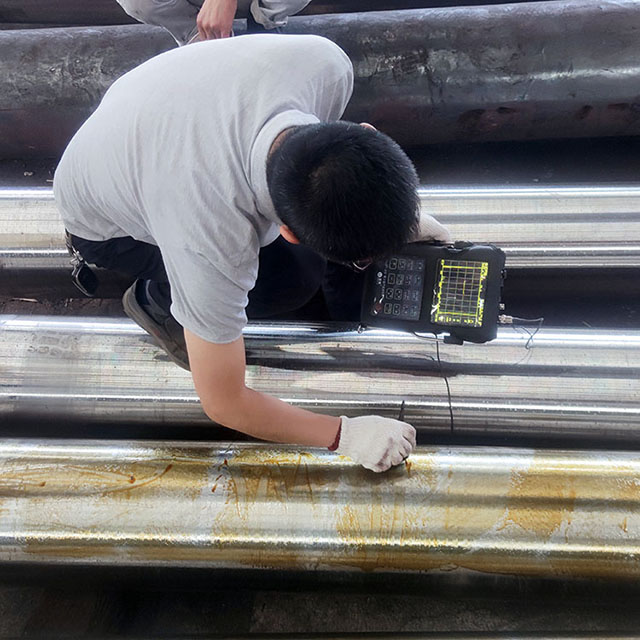
Testing — ultrasonic per ASTM A388 / EN 10228-3, hardness mapping across the section, tensile and impact testing
Certification — EN 10204 3.1 as standard, 3.2 available with third-party witness (ABS, BV, CCS, GL)
Export packing — bundled, end-capped and rust-protected for sea freight
They are the same grade family. 52100 is the ASTM A295 designation, 100Cr6 (1.3505) the European name under DIN EN 10089, and SUJ2 the Japanese equivalent under JIS G4805. Composition ranges overlap closely; the main difference buyers see in practice is the certificate format and the cleanliness verification standard applied.
Yes. Bars are 100 % ultrasonic tested per ASTM E2375 / EN 10228-3 to verify internal soundness, and we can supply with non-metallic inclusion ratings per ASTM E45 method A. For bearing races the cleanliness spec is tighter than for general engineering — let us know the inclusion class you need.
EN31 is the older British designation that maps to 52100 / 100Cr6 in composition, and the names are often used interchangeably in stock lists. For new bearing work, ASTM A295 52100 or DIN 100Cr6 are the safer call because they are the current international bearing steel standards; EN31 is mostly retained for legacy tooling.
For bearing races we recommend delivery in the annealed condition, with hardening done after machining to avoid distortion. For tooling applications (dies, gauges, punches) we can supply pre-hardened to 58–62 HRC and rough-machined, so you go straight to finish grinding.
See also our related pages: AISI 4140 alloy steel round bar for shaft and gear applications, and AISI 4340 alloy steel for highly stressed aerospace parts.
Send us your diameter, length, quantity, required hardness and destination port. You will get a quotation with the full technical proposal within 24 hours.
Email: enquiry@qilumetal.com | Web: www.qilumetal.com


