



| Quantity: | |
|---|---|


1020
Qilu
Product Description
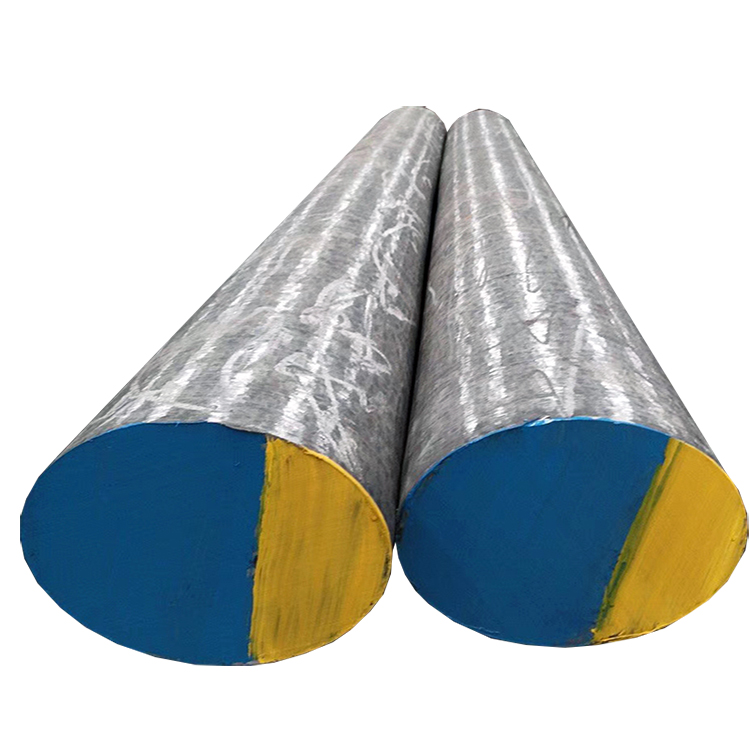
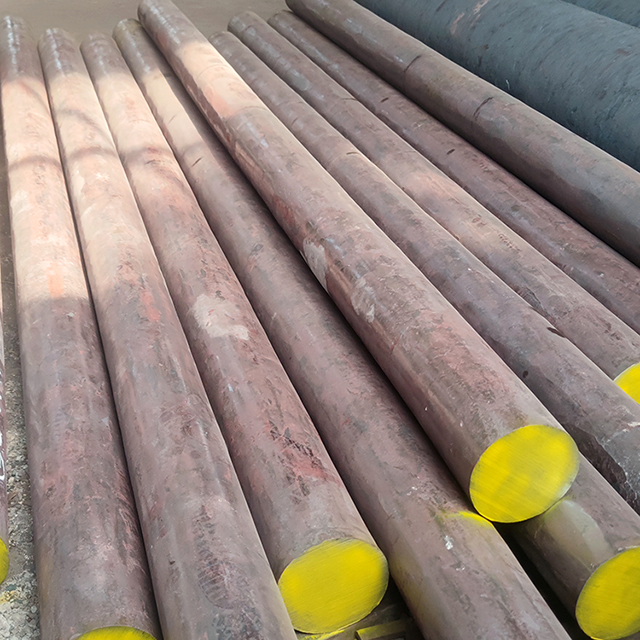
Hot rolled and cold drawn low carbon steel round bar, supplied as-rolled or annealed, 6 mm to 300 mm diameter, with rough machining done in our own workshop. Easy to weld, form and carburise.
Equivalent to: AISI / SAE 1020 (ASTM A29) · DIN C22 / 1.0402 (EN 10083-2) · JIS S20C (G4051) · BS 050A20 / En2A · GB 20# (GB/T 699)
ASTM A20 AISI 1020 Carbon Steel Bars
ASTM A20 AISI 1020 Carbon Steel Bars
ASTM A20 AISI 1020 Carbon Steel Bars
Supply form — Round bar, also available as bright drawn and wire rod
Process — Hot rolled / forged, cold drawn on request
Condition — As-rolled or annealed (not normally through-hardened)
Diameter range — 6–300 mm (hot rolled); 3–50 mm (cold drawn)
Melting route — EAF + LF
Standard — ASTM A29, DIN EN 10083-2, JIS G4051, GB/T 699
Certificate — EN 10204 3.1 standard, 3.2 on request
Lead time — 12–20 days
1020 is a low carbon steel specified in ASTM A29. With about 0.20 % carbon it sits below the through-hardening threshold — quenching does not raise strength by much — but it is precisely that low carbon level that makes it weldable, formable and suitable for case hardening. For carburised parts the surface takes a hard case while the core stays tough, which is the classic use case for this grade.
| Element | AISI 1020 (%) | DIN C22 / 1.0402 (%) | JIS S20C (%) | GB 20# (%) |
|---|---|---|---|---|
| Carbon (C) | 0.18 – 0.23 | 0.18 – 0.25 | 0.18 – 0.23 | 0.17 – 0.24 |
| Manganese (Mn) | 0.30 – 0.60 | 0.30 – 0.60 | 0.30 – 0.60 | 0.35 – 0.65 |
| Silicon (Si) | — | ≤ 0.40 | 0.15 – 0.35 | 0.17 – 0.37 |
| Phosphorus (P) ≤ | 0.030 | 0.030 | 0.030 | 0.035 |
| Sulfur (S) ≤ | 0.050 | 0.035 | 0.035 | 0.035 |
In the as-rolled condition 1020 reaches about 390–490 MPa tensile. The numbers are typical for medium sections and serve mainly to confirm that 1020 is a structural-grade steel for parts where strength is moderate and weldability is the priority. Higher strength is achieved by carburising and quenching the surface, not by through-hardening the bar.
| Condition | Hardness | Rm (MPa) | Re (MPa) | A5 (%) |
|---|---|---|---|---|
| As-rolled | 125 – 160 HB | 390 – 490 | 245 – 295 | 20 – 25 |
| Annealed | ≤ 156 HB | ~ 380 | ~ 235 | ~ 25 |
| Carburised + quenched (case) | 55 – 62 HRC (surface) | ~ 450 (core) | ~ 275 (core) | ~ 18 (core) |
| Standard | Designation | Material No. |
|---|---|---|
| ASTM A29 (US) | 1020 / G10200 | — |
| DIN EN 10083-2 (EU) | C22 / C22C | 1.0402 |
| JIS G4051 (JP) | S20C | — |
| BS 970 (UK) | 050A20 / En2A | — |
| GB/T 699 (CN) | 20# | — |
Carburised parts — gears, shafts and pins where a hard surface and tough core are needed
Welded structures — brackets, frames, base plates and general fabrication
Cold heading — bolts, screws and rivets in low-strength classes
Pins and bushes — hinge pins, locating pins and guide bushes in light machinery
1020 is rarely through-hardened because the carbon content is too low to develop useful hardness. The standard treatment is carburising at 880–920 °C followed by oil quenching and a low-temperature temper, which produces a hard, wear-resistant case (55–62 HRC) over a tough, ductile core. For parts that need surface hardness without distortion, induction hardening is also an option on localised areas like gear teeth or shaft journals.
Most suppliers in this business are traders who subcontract everything. We run our own processes, which means shorter cycles and one point of accountability when something needs fixing.
Heat treatment shop — quenching and tempering to your target hardness, with furnace charts recorded per batch
Machining shop — rough turning, peeling and cutting to length, so your bar arrives ready for finish machining
Testing — ultrasonic per ASTM A388 / EN 10228-3, hardness mapping across the section, tensile and impact testing
Certification — EN 10204 3.1 as standard, 3.2 available with third-party witness (ABS, BV, CCS, GL)
Export packing — bundled, end-capped and rust-protected for sea freight
Through-hardening of 1020 does not work well — the carbon content is too low to reach useful hardness in the core. The standard way to harden 1020 parts is carburising, which adds carbon to the surface and then quenching to form a hard case. If you need through-hardened parts, switch to 1045 (medium carbon) or AISI 4140 (alloy steel).
Carbon content. 1020 has about 0.20 % carbon and is used for weldability and carburised parts; 1045 has about 0.45 % carbon and is used where higher as-supplied strength is needed. 1020 welds better and forms better; 1045 is stronger in the as-rolled state and can be through-hardened in smaller sections. See our AISI 1045 carbon steel round bar page for the medium-carbon alternative.
S20C is the JIS G4051 designation for the same grade as AISI 1020 / C22 / 20#. It is the standard name on drawings from Japan, Korea and Taiwan. Composition ranges are essentially identical, so 1020, C22 and S20C are interchangeable in practice.
For standard sizes held in stock we accept trial quantities. For forged-to-order sizes the MOQ depends on the melting batch — contact us with your specification and we will confirm.
Send us your diameter, length, quantity, required hardness and destination port. You will get a quotation with the full technical proposal within 24 hours.
Email: enquiry@qilumetal.com | Web: www.qilumetal.com


