



| Quantity: | |
|---|---|


Cr12 D3
Qilu
Product Description
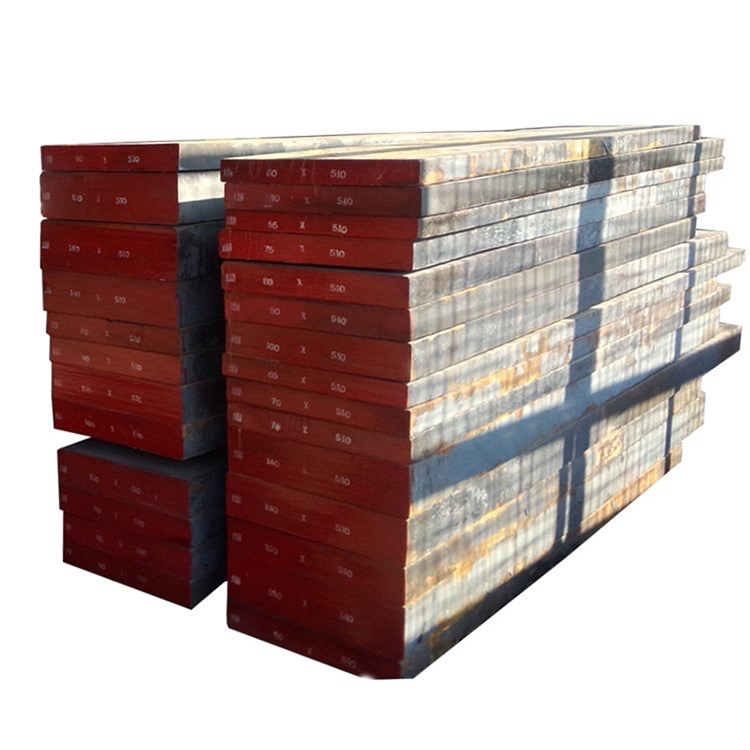
Hot forged D3 round bar, flats and plates, supplied annealed for machining, with heat treatment and ultrasonic testing done in our own workshop.
Equivalent to: AISI D3 · DIN 1.2080 / X210Cr12 · JIS SKD1 · GB Cr12
Cr12 SKD1 D3 1.2080 X210Cr12 Cold Work Tool Steel Flat Plate
Cr12 SKD1 D3 1.2080 X210Cr12 Cold Work Tool Steel Flat Plate
Cr12 SKD1 D3 1.2080 X210Cr12 Cold Work Tool Steel Flat Plate
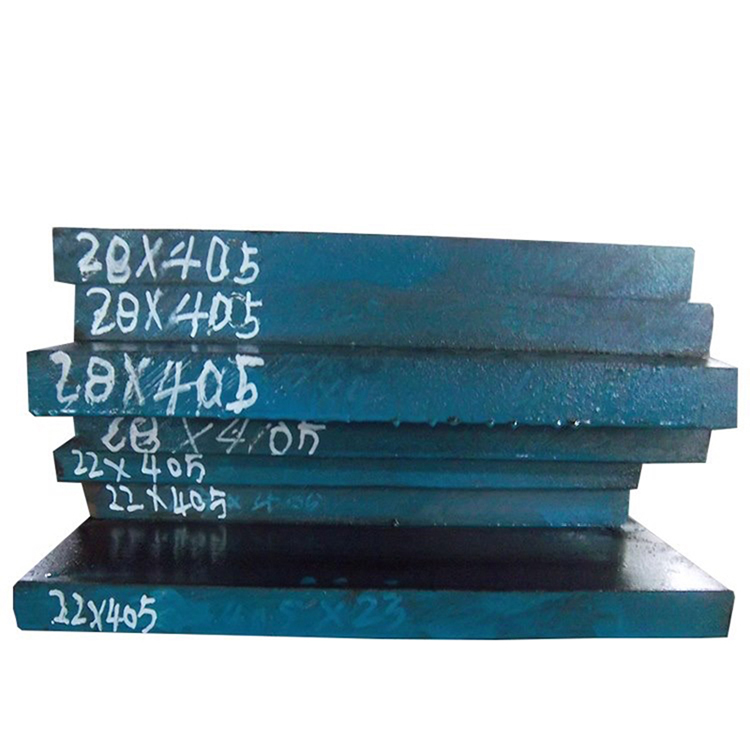
Supply form — Round bar, flats and plates
Process — Hot forged / hot rolled
Condition — Annealed (≤ 269 HB), hardened to 60-64 HRC
Diameter range — 10-400 mm
Standard — ASTM A681
Certificate — EN 10204 3.1 standard, 3.2 on request
Lead time — 15-30 days
D3 is the highest-carbon, highest-chromium cold-work tool steel in the ASTM A681 D-series. With 2.0-2.3 % carbon and 11-13 % chromium it forms very hard Cr-carbides that give maximum wear resistance — used for blanking and drawing dies, brick and tile molds, and cutting tools that must hold an edge in abrasive service. It is harder and more wear-resistant than D2 but more brittle.
| Element | C | Mn | Si | Cr |
|---|---|---|---|---|
| ASTM A681 D3 | 2.00-2.30 | 0.20-0.60 | 0.10-0.60 | 11.00-13.00 |
Typical values. D3 is run at high hardness for maximum wear resistance; toughness is lower than D2.
| Property | Annealed | Hardened (typical) |
|---|---|---|
| Hardness | ≤ 269 HB | 60-64 HRC |
| Tensile strength, Rm (MPa) | — | ≈ 1900 |
| Impact, KV (J) | — | ≥ 8 |
| Wear resistance | — | Excellent (highest in D-series) |
| Standard | Designation |
|---|---|
| ASTM (USA) | D3 |
| DIN / EN (Germany/Europe) | 1.2080 / X210Cr12 |
| JIS (Japan) | SKD1 |
| GB (China) | Cr12 |
| Werkstoff Nr. | 1.2080 |
Blanking — blanking and piercing dies for abrasive materials
Drawing — deep-drawing dies
Molds — brick, tile and ceramic molds
Cutting — paper, textile and abrasive cutting tools
D3 is hardened from 950-980 °C in oil and tempered at 150-200 °C. The high carbon means oil quenching is preferred over air to get full hardness. Toughness is lower than D2, so D3 is chosen where wear resistance outweighs impact — cutting abrasive stock, or molding abrasive materials.
Most suppliers in this business are traders who subcontract everything. We run our own processes, which means shorter cycles and one point of accountability when something needs fixing.
Heat treatment shop — quenching, tempering and vacuum heat treatment to your target hardness, with furnace charts recorded per batch
Machining shop — rough turning, peeling, milling and cutting to length, so your bar or block arrives ready for finish machining
Testing — ultrasonic per ASTM A388 / EN 10228-3, hardness mapping across the section, microstructure on request
Certification — EN 10204 3.1 as standard, 3.2 available with third-party witness (ABS, BV, CCS, GL)
Export packing — bundled, end-capped and rust-protected for sea freight
D3 has higher carbon (2.0-2.3 % vs 1.4-1.6 %) and no molybdenum/vanadium, giving higher wear resistance but lower toughness. D3 is for abrasive service where the die must hold an edge; D2 is the more general-purpose grade. See our D2 page.
Yes. We heat treat to 60-64 HRC, rough-machine to size and ultrasonically test. Furnace charts and hardness mapping come with the shipment.
EN 10204 3.1 mill certificate as standard. 3.2 with third-party witness on request.
Send us your grade, dimensions, quantity, required hardness and destination port. You will get a quotation with the full technical proposal within 24 hours.
Email: enquiry@qilumetal.com | Web: www.qilumetal.com


