



9260 SUP7
Qilu
7228400000
Product Description
Hot rolled and forged 9260 spring steel round bar from 6 mm to 120 mm, supplied annealed to 250 HB for forming or quenched and tempered to 45–50 HRC. The silicon-manganese grade used for leaf springs, coil springs and torsion bars.
Equivalent to: AISI / SAE 9260 (ASTM A29) · EN 60Si7 (EN 10089) · JIS SUP7 (G4801) · GB 60Si2MnA (GB/T 1222)
AISI 9260 60Si2MnA SUP7 60Si7 Spring Steel Round Bar
AISI 9260 60Si2MnA SUP7 60Si7 Spring Steel Round Bar
AISI 9260 60Si2MnA SUP7 60Si7 Spring Steel Round Bar
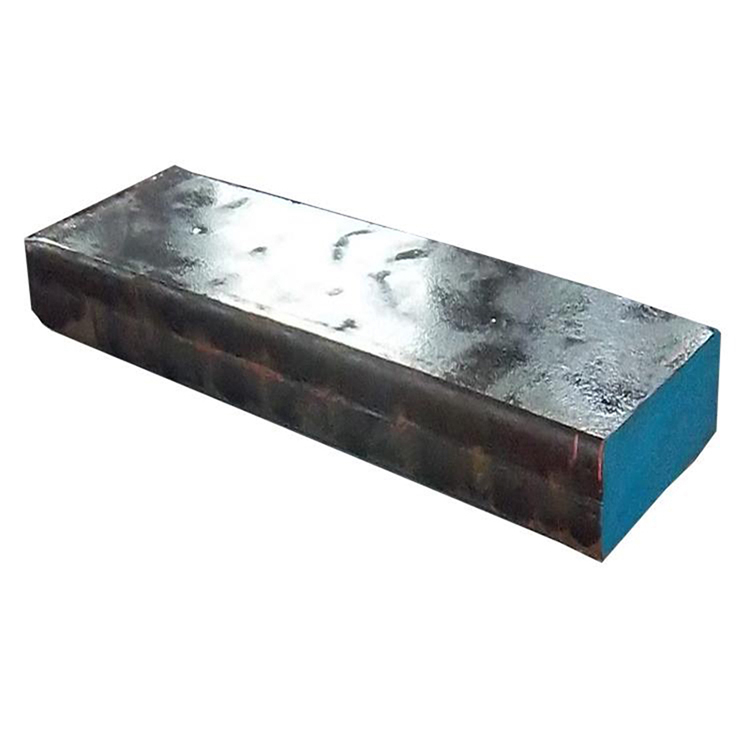
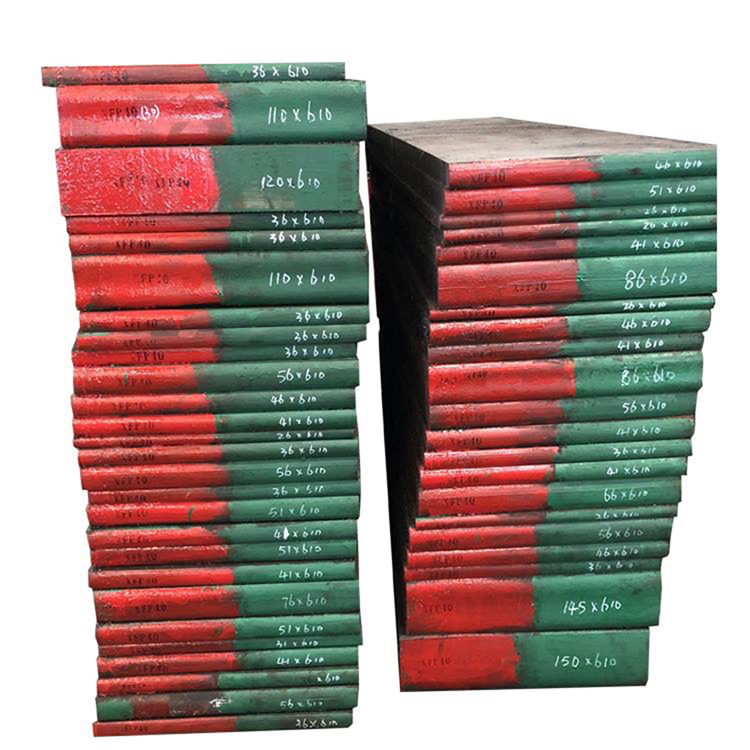
Supply form — Round bar, flat bar and plate (leaf spring stock)
Process — Hot rolled / forged, peeled on request
Condition — Annealed (≤ 250 HB) for forming, or quenched and tempered to 45–50 HRC
Size range — 6–120 mm round; 6–60 mm thick flat, 20–160 mm wide
Melting route — EAF + LF; vacuum degassed on request
Standard — ASTM A29, EN 10089, JIS G4801, GB/T 1222
Certificate — EN 10204 3.1 standard, 3.2 on request
Lead time — 20–35 days
9260 is a silicon-manganese spring steel, and the silicon is what defines it. At 1.80–2.20 % it raises tempering resistance, so the steel keeps its hardness at tempering temperatures where a plain carbon spring steel has already started to soften. That margin is what lets 9260 survive the stress-relief and hot-forming steps in spring production, and it is why the grade became the workhorse for heavy leaf springs. Manganese at 0.75–1.00 % supplies the hardenability; there is no chromium, so section size limits how deep the hardness reaches.
| Element | AISI 9260 (%) | JIS SUP7 (%) | EN 60Si7 (%) | GB 60Si2MnA (%) |
|---|---|---|---|---|
| Carbon (C) | 0.56 – 0.64 | 0.56 – 0.64 | 0.56 – 0.64 | 0.56 – 0.64 |
| Silicon (Si) | 1.80 – 2.20 | 1.80 – 2.20 | 1.60 – 2.00 | 1.60 – 2.00 |
| Manganese (Mn) | 0.75 – 1.00 | 0.70 – 1.00 | 0.60 – 0.90 | 0.70 – 1.00 |
| Chromium (Cr) ≤ | — | — | — | 0.35 |
| Phosphorus (P) ≤ | 0.035 | 0.030 | 0.025 | 0.025 |
| Sulfur (S) ≤ | 0.040 | 0.030 | 0.025 | 0.020 |
Order the annealed condition if you still have to form the spring — at ≤ 250 HB the bar cuts and coils without cracking. Final properties come from the quench and temper after forming: austenitise near 860–880 °C, oil quench, then temper in the 400–500 °C band to land at 45–50 HRC. At that hardness 9260 reaches roughly 1600 MPa tensile with enough ductility left to absorb impact. Running the hardness higher makes the spring notch-sensitive, which is why heavy leaf springs are not usually run above about 50 HRC.
| Condition | Hardness | Rm (MPa) | Re (MPa) | A5 (%) |
|---|---|---|---|---|
| Annealed | ≤ 250 HB | ~ 760 | ~ 450 | ~ 20 |
| Q&T (440 °C temper) | 45 – 50 HRC | 1550 – 1750 | 1400 – 1550 | 6 – 9 |
| Standard | Designation | Material No. |
|---|---|---|
| ASTM A29 (US) | 9260 / G92600 | — |
| EN 10089 (EU) | 60Si7 | — |
| JIS G4801 (JP) | SUP7 | — |
| GB/T 1222 (CN) | 60Si2MnA | — |
Vehicle suspension — parabolic and multi-leaf springs for trucks, trailers and buses
Railway — wagon and locomotive suspension springs
Coil springs — heavy-duty helical springs for industrial machinery and agricultural equipment
Torsion bars — anti-roll and stabiliser bars where fatigue life governs the design
Clutch and brake springs — high-stress springs that run hot under load
With 9260 the order is always form first, then harden — quenching leaves the part at 55–60 HRC and almost unmachinable. A typical cycle runs anneal at 760–790 °C to soften for coiling or rolling to profile, austenitise at 860–880 °C, oil quench (water is possible on thicker sections but raises the cracking risk), then temper at 400–500 °C to the target 45–50 HRC. Shot peening after tempering is standard on leaf springs: it puts the surface into compression and is often the difference between a spring that lasts and one that fails by fatigue at the surface. Decarburisation during hot forming or reheating is the other thing to watch — a soft surface layer will fail long before the core does.
Most suppliers in this business are traders who subcontract everything. We run our own processes, which means shorter cycles and one point of accountability when something needs fixing.
Heat treatment shop — carburising, quenching and tempering in our own furnaces, with charts recorded per batch
Machining shop — peeling, rough turning and cutting to length, so your bar arrives ready for finish machining
Testing — ultrasonic per ASTM A388 / EN 10228-3, hardness mapping across the section, tensile and impact testing
Certification — EN 10204 3.1 as standard, 3.2 available with third-party witness (ABS, BV, CCS, GL)
Export packing — bundled, end-capped and rust-protected for sea freight
They are the same silicon-manganese spring steel family under different standards. 9260 is the ASTM A29 name, SUP7 the JIS G4801 name, 60Si2MnA the Chinese GB/T 1222 name and 60Si7 the European EN 10089 name. The ranges overlap closely. The one practical difference is that 9260 and SUP7 permit slightly more phosphorus and sulfur than the European and Chinese grades, which matters on fatigue-critical springs.
It can be welded, but springs almost never are — the heat-affected zone loses the temper that gives the spring its strength. Where welding is unavoidable on spring steel, the part has to be re-hardened and tempered after welding, and even then the joint remains a fatigue weak point.
If you still have to coil, bend or roll the spring, order it annealed at ≤ 250 HB. If the spring is finished and only needs trimming or grinding, order it quenched and tempered to 45–50 HRC. Tell us the finished hardness and the section size: above roughly 40 mm the core hardness of a Si-Mn grade starts to drop, because there is no chromium to carry hardenability.
Yes. Leaf spring stock is supplied as flat bar or plate, 6–60 mm thick and 20–160 mm wide, in the annealed condition for forming. Send us the finished leaf dimensions and the required hardness and we will quote the nearest standard size.
See also our related spring steel pages: AISI 5160 chromium spring steel, GB 65Mn spring steel and JIS SUP10 / 6150 Cr-V spring steel.
Send us your diameter, length, quantity and required condition. You will get a quotation with the full technical proposal within 24 hours.
Email: enquiry@qilumetal.com | Web: www.qilumetal.com


